All-Terrain Vehicles (ATVs) offer a thrilling blend of power and versatility, but harnessing their capabilities requires skill and awareness. Whether you're navigating rugged trails, working on a farm, or simply enjoying the outdoors, understanding how to maintain control is paramount for both your safety and the longevity of your machine. This guide provides a detailed, step-by-step approach to help you become a confident and responsible ATV rider.
ATV accidents are often attributed to operator error, highlighting the critical importance of proper training and technique. Learning to anticipate hazards, react appropriately, and maintain a stable riding position can significantly reduce the risk of injury. This guide covers essential aspects of ATV control, from pre-ride checks to advanced riding maneuvers.
By following these guidelines and practicing consistently, you can develop the skills necessary to navigate various terrains safely and enjoyably. Remember that responsible riding is not just about skill; it's also about respecting the environment and other users.
-
Step 1: Pre-Ride Inspection: Ensuring a Safe Start
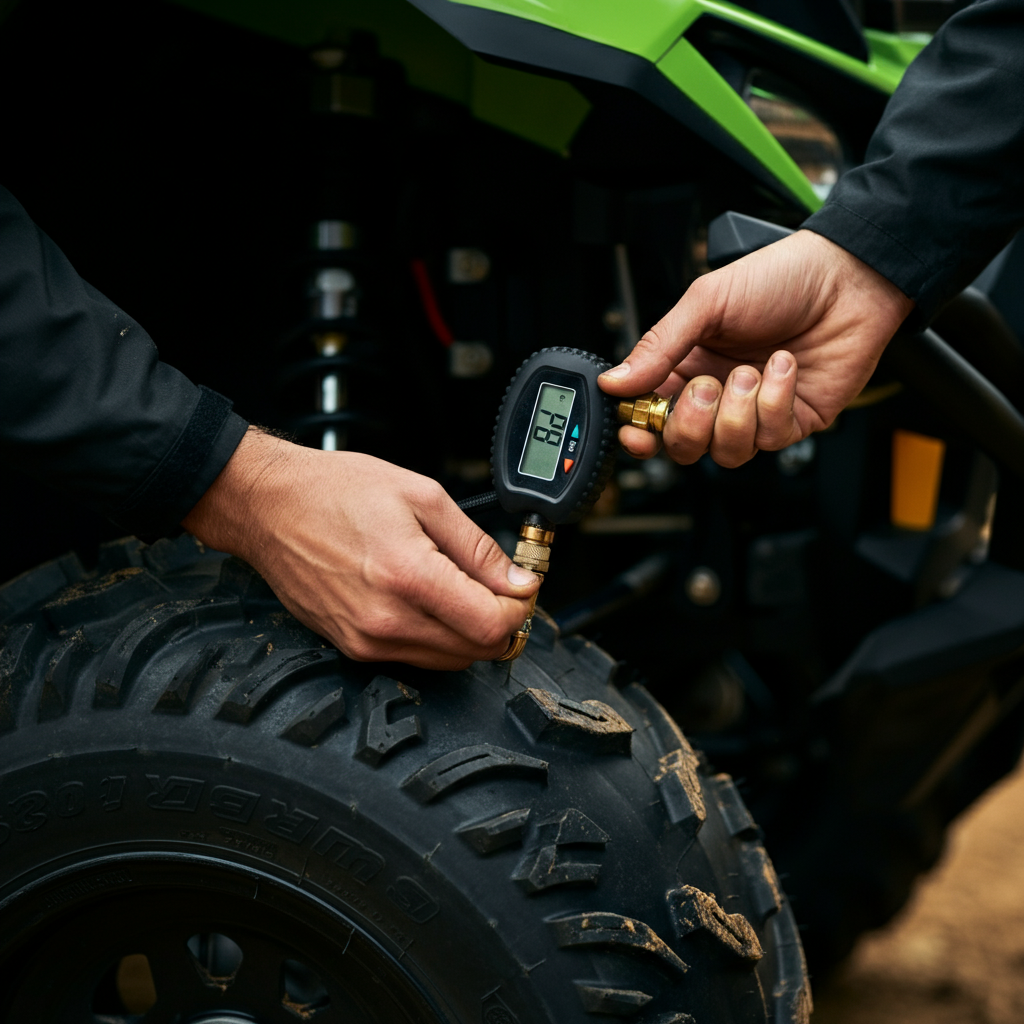
Before each ride, a thorough inspection of your ATV is essential. This is not just a formality, but a vital step in preventing mechanical failures that could lead to loss of control. Check tire pressure, ensuring it matches the manufacturer's recommendations. Inspect the brakes for proper function, looking for leaks or excessive wear. Verify that all lights are working correctly. Finally, examine the throttle and steering for smooth, unrestricted movement.
-
Step 2: Mastering the Rider Triangle: Achieving Optimal Balance
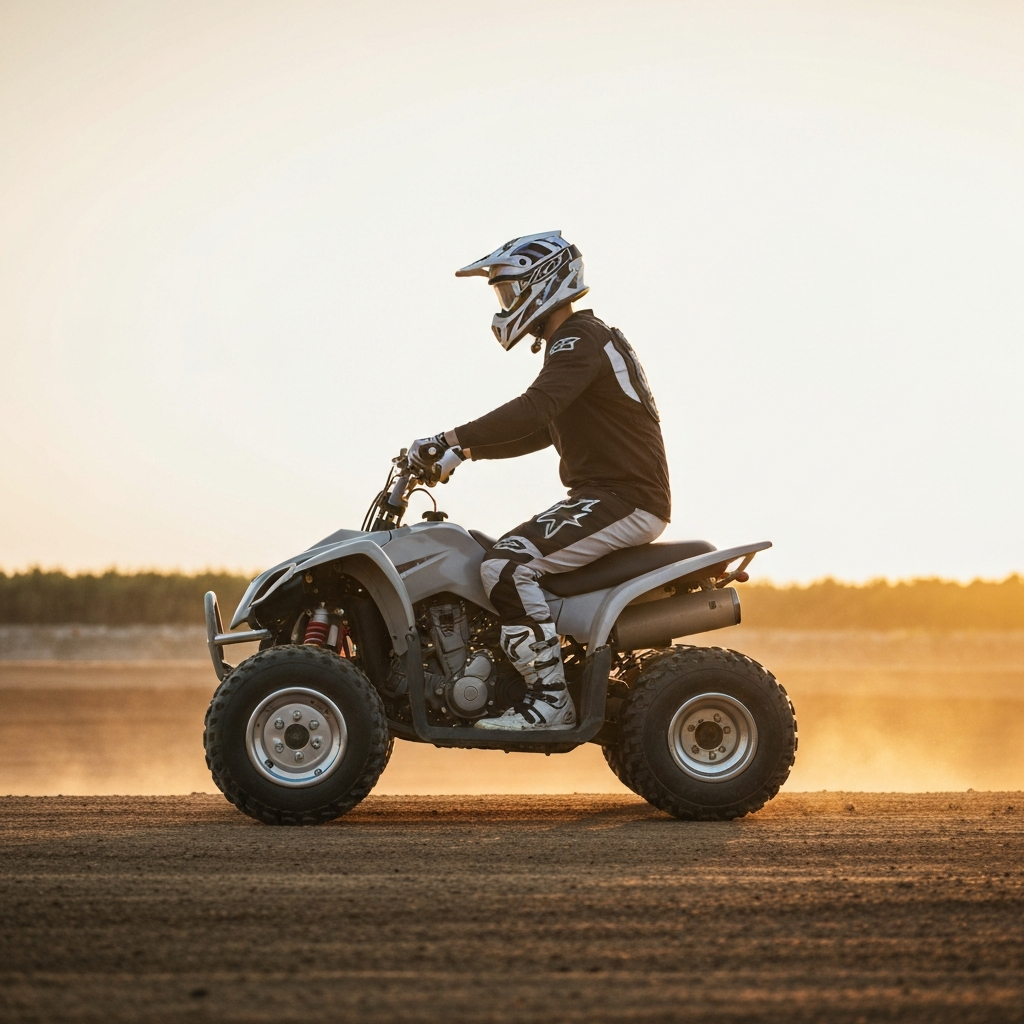
The "rider triangle" refers to the relationship between your hands, feet, and seat. Maintaining a balanced and active riding position is key to control. Keep your feet firmly planted on the footrests, your knees slightly bent, and your elbows relaxed. This allows you to absorb shocks and react quickly to changes in terrain. Avoid locking your elbows or gripping the handlebars too tightly, as this can lead to fatigue and reduced control.
-
Step 3: Throttle Control: Smooth Acceleration and Deceleration
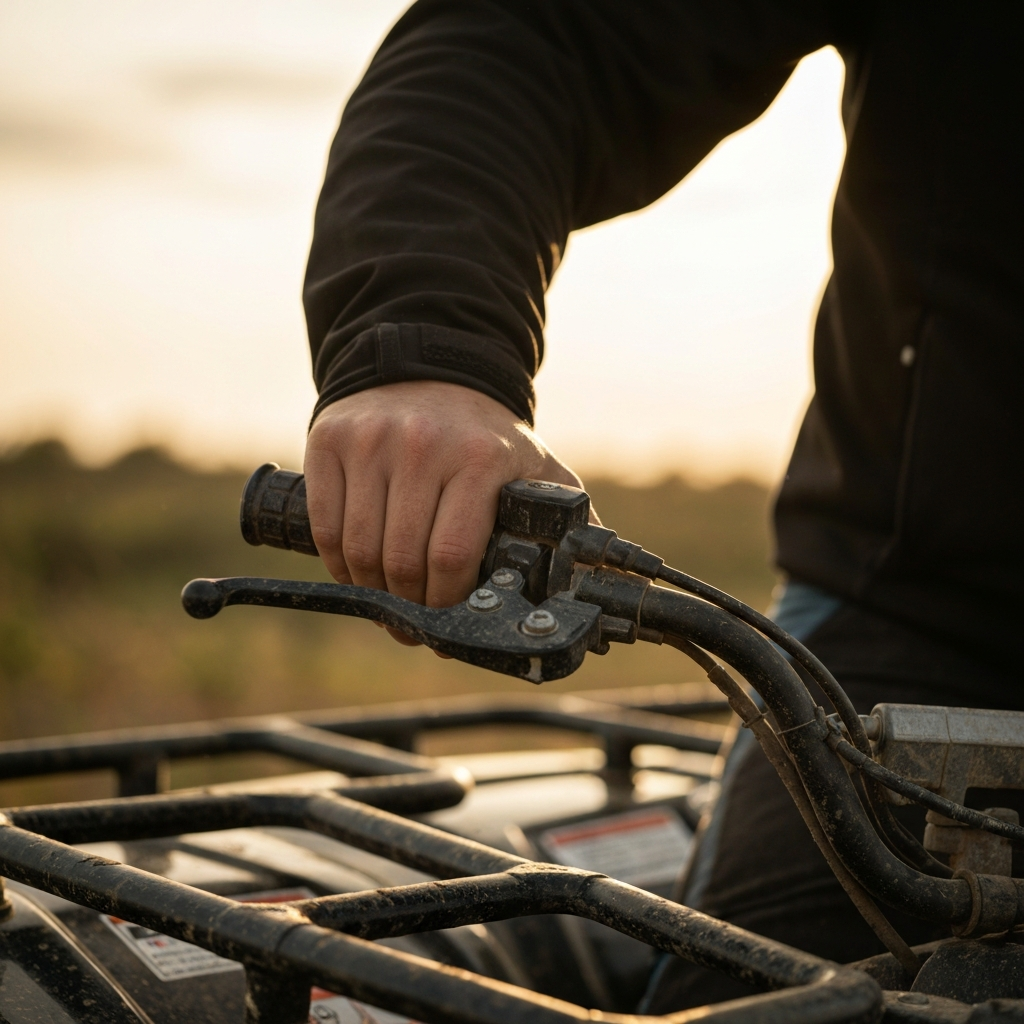
Smooth and precise throttle control is crucial for maintaining stability and preventing sudden jerks. Practice feathering the throttle to initiate movement and avoid abrupt acceleration, especially on loose surfaces. Learn to modulate the throttle to maintain a consistent speed, and use engine braking to assist with deceleration. Be particularly cautious when applying the throttle in turns, as excessive power can lead to loss of traction.
-
Step 4: Braking Techniques: Controlled Stops in Any Situation
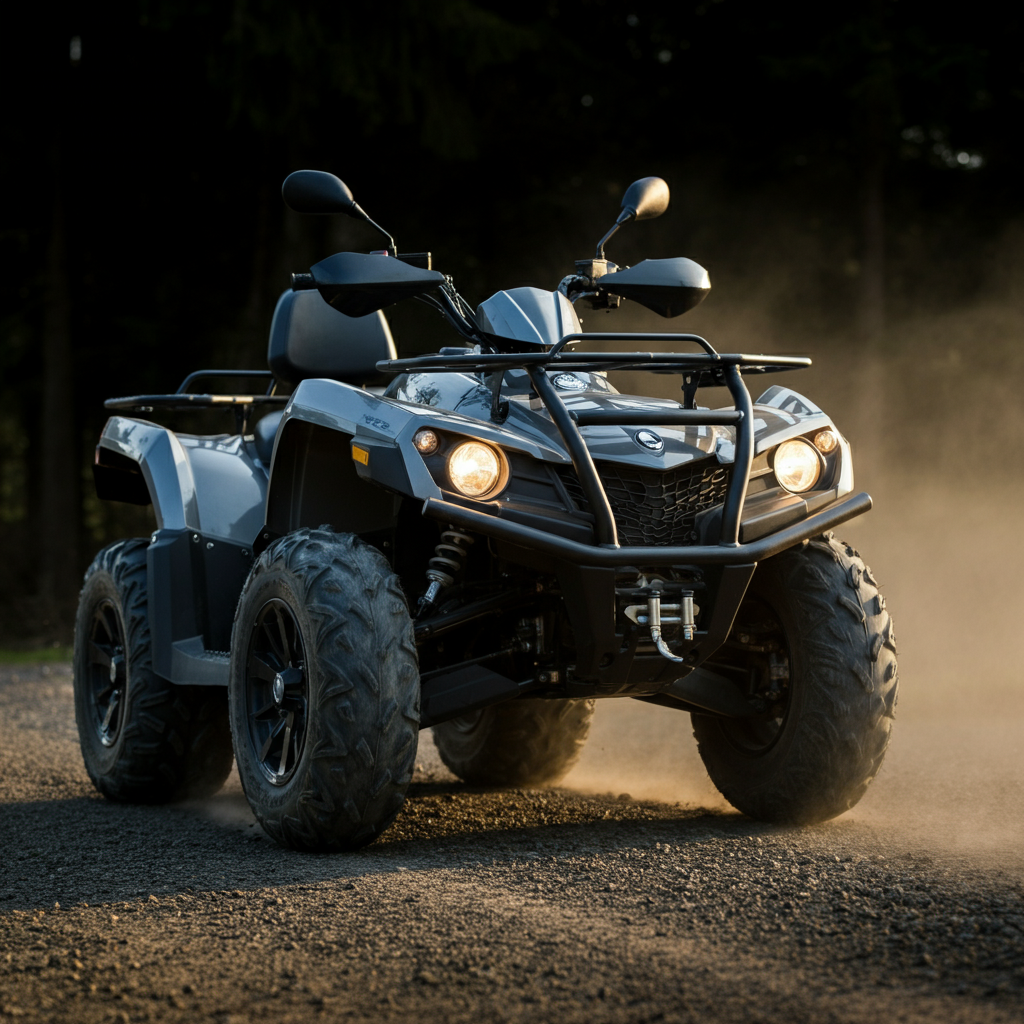
Effective braking is essential for avoiding collisions and maintaining control on challenging terrain. Use both the front and rear brakes simultaneously to achieve maximum stopping power. Practice progressive braking, gradually increasing pressure until you reach the desired level of deceleration. Avoid locking up the wheels, as this can cause skidding. In emergency situations, use a combination of braking and shifting your weight to improve stability.
-
Step 5: Weight Shifting: Enhancing Stability and Maneuverability
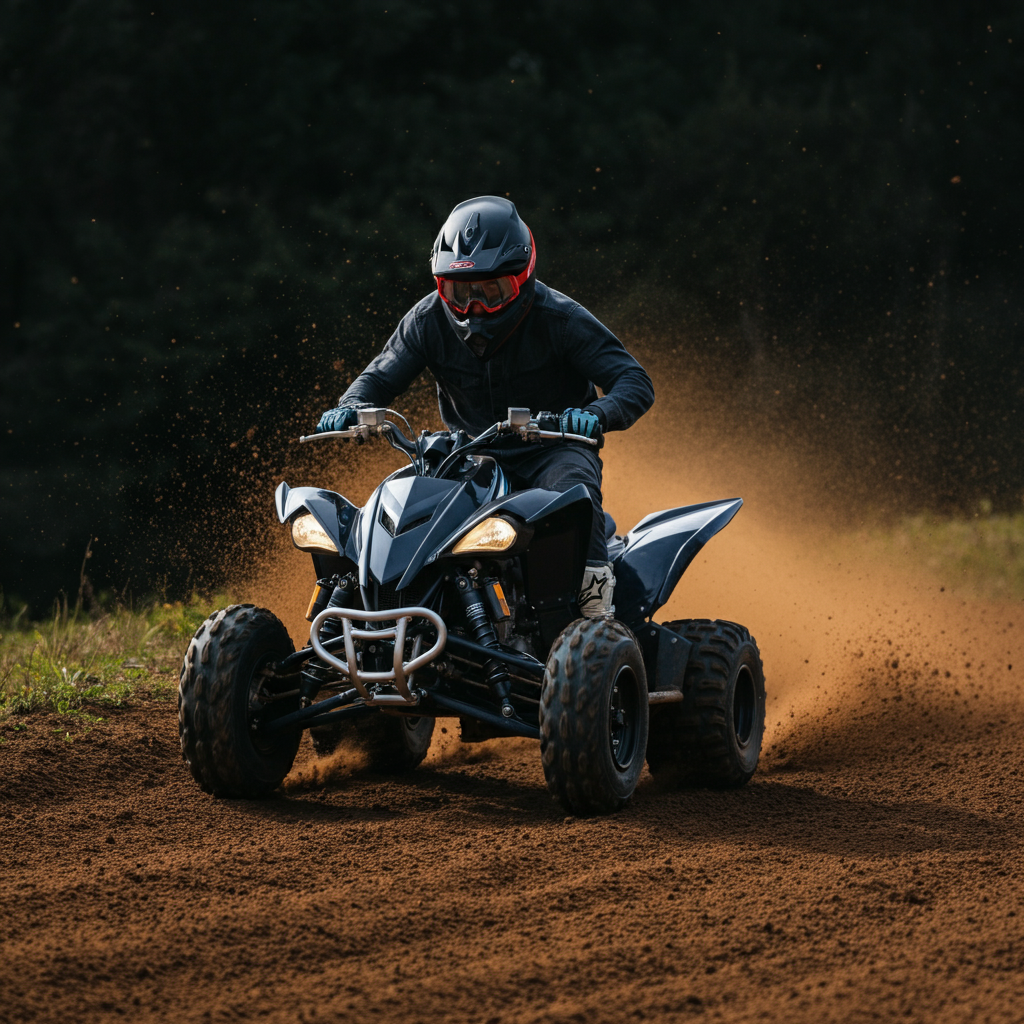
Shifting your weight is a powerful technique for improving stability and maneuverability, especially on uneven terrain or during turns. When cornering, lean your body in the direction of the turn to help maintain traction and reduce the risk of tipping. On steep inclines or declines, shift your weight forward or backward to keep the ATV balanced and prevent it from flipping. Practice these techniques in a controlled environment to develop your skills.
-
Step 6: Hill Climbing and Descent: Conquering Slopes with Confidence
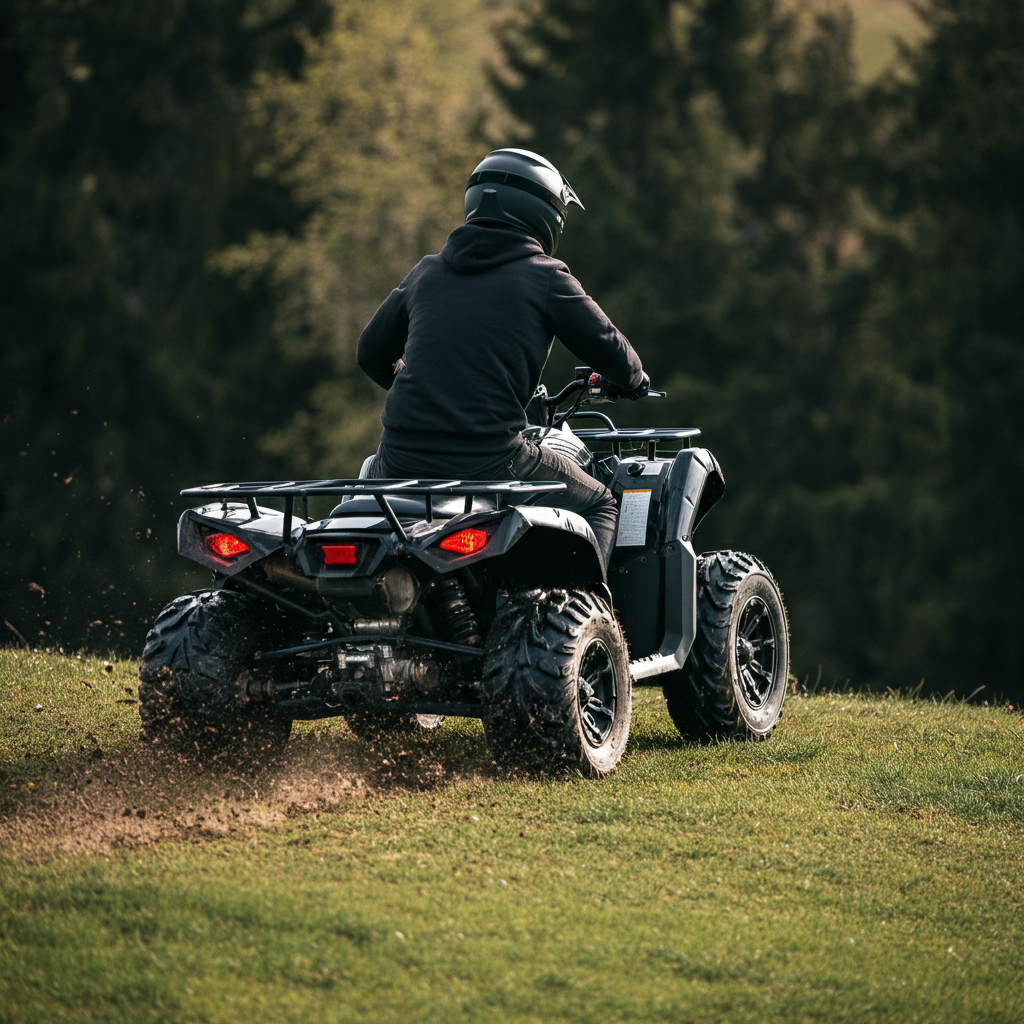
Hill climbing and descent require careful planning and execution. Before attempting a hill, assess the terrain and identify any obstacles. Approach the hill at a moderate speed in a low gear, maintaining a steady throttle input. Avoid sudden acceleration or braking, which can disrupt your momentum. When descending, use engine braking to control your speed and shift your weight backward to prevent the ATV from pitching forward. Never attempt to turn around on a steep slope.
-
Step 7: Navigating Obstacles: Maintaining Momentum and Balance
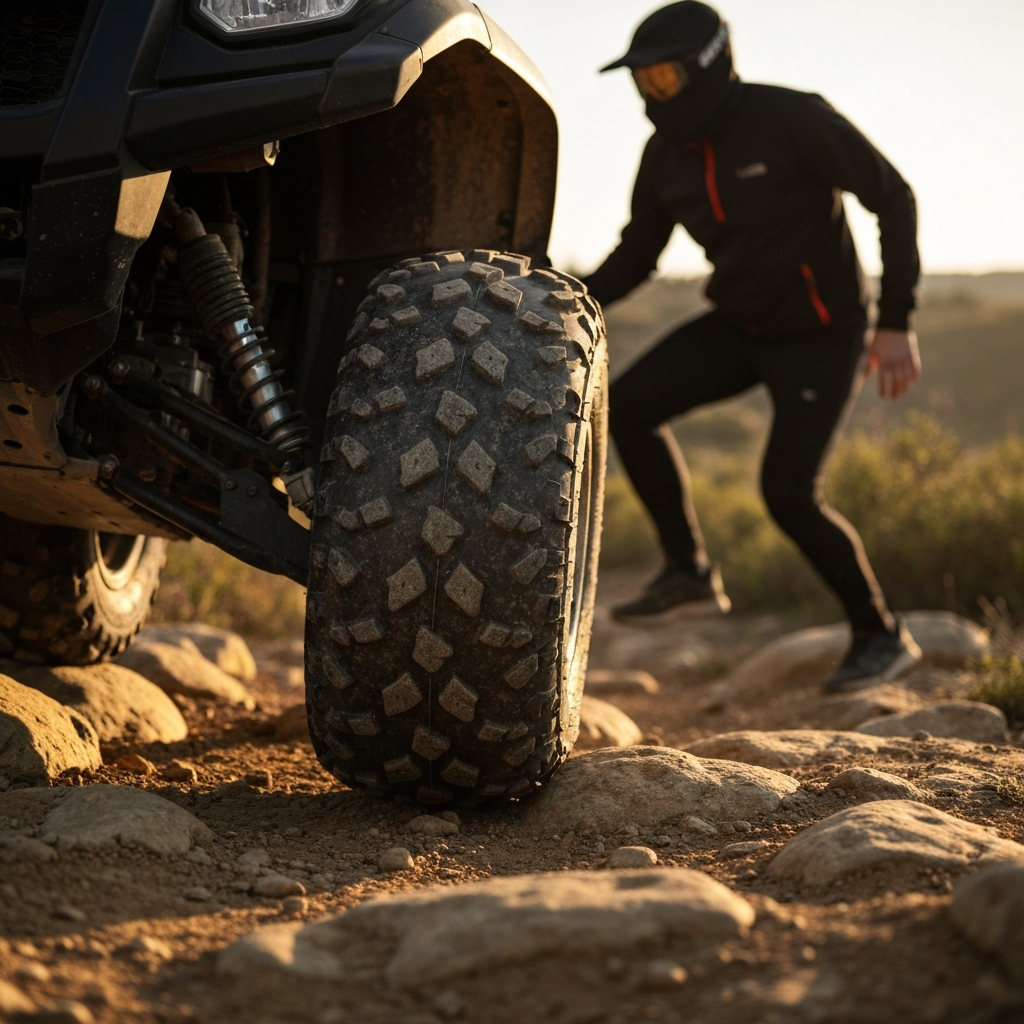
Encountering obstacles such as rocks, logs, or ruts is inevitable when riding off-road. Approach obstacles at a controlled speed, using your body weight to absorb the impact. Choose the smoothest line possible, avoiding sharp edges or large gaps. Maintain a steady throttle input to maintain momentum and prevent the ATV from stalling. If necessary, use momentum to lift the front wheels over obstacles, but be cautious not to overdo it.
Safety Considerations
Always wear a helmet and other appropriate protective gear, including eye protection, gloves, and sturdy boots. Ride within your limits and avoid taking unnecessary risks. Be aware of your surroundings and watch out for other vehicles, pedestrians, and wildlife. Never ride under the influence of alcohol or drugs. Take a certified ATV safety course to learn essential skills and techniques.
Common Mistakes to Avoid
One common mistake is riding too fast for the conditions. Adjust your speed based on the terrain, visibility, and your skill level. Another mistake is failing to perform pre-ride inspections, which can lead to mechanical failures. Avoid riding beyond your capabilities and always be prepared for unexpected situations.
FAQ Section
- What is the best way to handle mud?
- Choose a low gear, maintain a steady throttle, and keep your momentum. Avoid stopping in deep mud.
- How do I prevent my ATV from tipping?
- Shift your weight in the direction of the lean, avoid sudden turns, and maintain a low center of gravity.
- What should I do if I get stuck?
- Assess the situation, try rocking the ATV back and forth, and consider using a winch or asking for assistance.
In conclusion, mastering ATV control requires a combination of knowledge, skill, and practice. By following the steps outlined in this guide, you can develop the techniques necessary to navigate various terrains safely and confidently. Remember to prioritize safety, respect the environment, and always ride within your limits. Safe riding!