That strange clunk, whine, or squeal emanating from your vehicle can be more than just annoying – it could be a sign of a serious problem lurking under the hood or chassis. Ignoring these noises can lead to costly repairs down the line, or worse, a dangerous breakdown. However, blindly taking your car to a mechanic without any preliminary investigation can also empty your wallet unnecessarily.
This guide will equip you with the knowledge and techniques needed to effectively diagnose those mysterious car noises yourself. We'll walk you through a systematic approach, from identifying the type of sound to pinpointing its likely source. By understanding the language of your car, you can save money and gain valuable insight into its overall health.
Don't let that mystery noise cause you anxiety and a thinner wallet. Let's get started and decipher what your car is trying to tell you!
Step 1: Identify the Type of Noise
The first and most crucial step is to accurately describe the noise. Is it a high-pitched squeal, a deep rumble, a metallic clang, or a rhythmic clicking? Note the exact sound as specifically as possible. Think about its quality – is it grinding, whistling, or popping? Also, consider when you hear the noise. Does it only occur when you start the car, while you're driving at a certain speed, when turning, or only when braking? The more detailed your description, the easier it will be to narrow down the potential causes.

Step 2: Determine When the Noise Occurs
Context is key. Knowing when the noise happens is just as important as what the noise sounds like. Does it only appear during cold starts? This could indicate an issue with the starter motor or exhaust system. Does it occur when accelerating? This might point to problems with the engine or transmission. Does it only happen when braking? This is a strong indication of brake-related issues. Pay close attention to the specific conditions that trigger the noise and record them carefully. Try to replicate the noise consistently to aid in diagnosis. Does it only happen when the engine is cold or hot? Does it change when you engage the clutch?

Step 3: Pinpoint the Location of the Noise
Try to determine the general area from where the noise originates. Is it coming from the front of the car, the rear, the engine compartment, or underneath the vehicle? Sometimes, this can be tricky, as sounds can travel and reverberate. If possible, have a friend stand outside the car while you drive slowly past to help pinpoint the location. If the sound only occurs when you turn, have them stand by the front wheels to see if it is more prominent on either side. Listen carefully inside the cabin and try to isolate the source of the sound as accurately as possible. Do not attempt to inspect the engine while it's running, as this could cause serious injury.

Step 4: Check the Easy Suspects
Before jumping to conclusions about major mechanical failures, examine the easily accessible and common culprits. Check your tires for any signs of uneven wear, bulges, or embedded objects. Inspect the brake pads through the wheel spokes to gauge their remaining thickness. Look under the hood and check the fluid levels (oil, coolant, brake fluid, power steering fluid). Listen for any unusual sounds coming from the belts and pulleys. A worn or loose belt can often cause a high-pitched squealing noise. Give the exhaust system a visual inspection for any obvious leaks or damage.

Step 5: Test Drive and Narrow Down the Possibilities
Carefully test drive the car, paying close attention to the noise and the conditions under which it occurs. Can you reproduce the noise consistently? Does it change in intensity or frequency based on your speed, engine RPM, or steering input? Try different scenarios, such as accelerating, braking, turning, and driving over bumps, to gather more information. The results of this test drive should help you narrow down the list of potential causes and guide your next steps.

Step 6: Consult Reliable Resources
Once you've gathered as much information as possible, consult reliable resources to further diagnose the problem. Online forums dedicated to your specific make and model can be invaluable, as other owners may have experienced similar issues. A repair manual (either physical or online) can provide detailed information about the components and systems in your car. Be wary of relying solely on generic online advice; always cross-reference information from multiple sources. YouTube videos can sometimes be helpful, but ensure that the presenter is knowledgeable and credible.
Step 7: When to Call a Professional
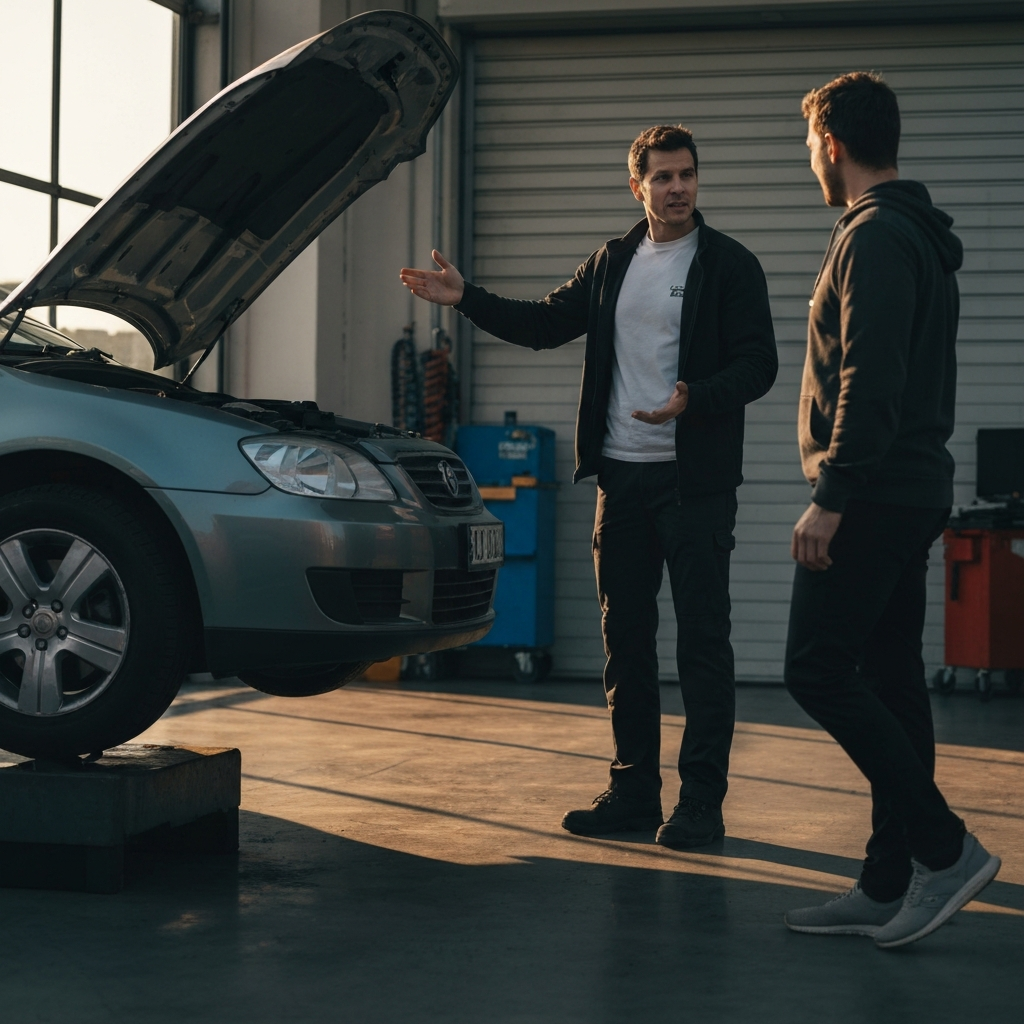
There comes a point when it's best to seek professional help. If you're uncomfortable working on your car, lack the necessary tools or expertise, or if the noise persists after your initial investigation, it's time to consult a qualified mechanic. Attempting to fix a complex problem yourself without proper knowledge can lead to further damage or even personal injury. When taking your car to a mechanic, provide them with a detailed description of the noise, when it occurs, and any steps you've already taken to diagnose the problem. This will help them to diagnose the issue more efficiently and save you money on labor costs.
Tools or Materials Required
- Jack and Jack Stands (for safe lifting)
- Wheel Chocks
- Basic Socket Set
- Screwdrivers (various sizes)
- Flashlight or Work Light
- Mechanic's Stethoscope (optional, but helpful)
- Gloves
- Safety Glasses
Safety Considerations
Always prioritize safety when working on your car. Use jack stands when lifting the vehicle to prevent it from collapsing. Disconnect the negative battery cable before working on any electrical components. Wear safety glasses to protect your eyes from debris. Work in a well-ventilated area to avoid inhaling harmful fumes. Never work under a vehicle supported only by a jack. If you are unsure about any aspect of the repair, consult a qualified mechanic.
Common Mistakes to Avoid
- Ignoring the noise for too long: Small problems can quickly escalate into larger, more expensive ones.
- Replacing parts without proper diagnosis: This can waste money and not fix the underlying problem.
- Over-tightening bolts: This can strip threads and damage components.
- Working in unsafe conditions: Always prioritize safety when working on your car.
- Failing to properly research the problem: Take the time to gather information and understand the potential causes.
FAQ Section
Q: My car is making a clicking noise when I turn. What could it be?
A: This could be a sign of a worn CV joint. Inspect the CV joint boots for any cracks or tears.
Q: My brakes are squealing. Are they bad?
A: Squealing brakes can be caused by worn brake pads, but also by other factors such as brake dust or glazed rotors. Inspect the brake pads to determine their remaining thickness.
Q: My car is making a rattling noise under the car. What should I check?
A: Check for loose exhaust components, heat shields, or suspension parts. A loose catalytic converter heat shield is a common culprit.
Conclusion
Diagnosing a mystery car noise can seem daunting, but by following these steps, you can effectively identify the source of the problem and avoid unnecessary expenses. Remember to start with a detailed description of the noise, determine when it occurs, and pinpoint its location. Don't hesitate to consult reliable resources and seek professional help when needed. By taking a proactive approach, you can keep your car running smoothly and your wallet happy.