Pickleball, a sport that's rapidly gaining popularity, combines elements of tennis, badminton, and table tennis. While the gameplay is relatively straightforward, understanding the scoring system is crucial for both beginners and seasoned players. Mastering pickleball scoring not only enhances your competitive edge but also ensures fair play and avoids confusion on the court.
This guide breaks down the intricacies of pickleball scoring, covering everything from serving rules and point allocation to calling out the score and determining the winner. Whether you're playing singles or doubles, casually or competitively, this comprehensive guide will equip you with the knowledge you need to confidently navigate the scoring process.
Get ready to elevate your pickleball game by unlocking the secrets to accurate and strategic scoring. Let's dive in!
1. Understanding Point Scoring
In pickleball, points are only scored by the serving team. If the receiving team commits a fault (e.g., hitting the ball out of bounds, failing to let the ball bounce once on their side after the serve, hitting the ball into the net), the serving team earns a point. The receiving team cannot score points directly; their primary goal is to force a fault by the serving team to gain the serve. A fault results in either a point for the serving team (if the receiving team faulted) or a change of serve (if the serving team faulted).

2. Singles Scoring: Serve and Score
In singles pickleball, serving is dictated by your score. If your score is even (0, 2, 4, etc.), you serve from the right service court. If your score is odd (1, 3, 5, etc.), you serve from the left service court. Remember this simple rule: Even score, right side; Odd score, left side. The receiver always positions themselves diagonally opposite the server.

3. Doubles Scoring: The Initial Serve and Server Number
Doubles pickleball introduces the concept of "server numbers." At the beginning of each game, only one player from the first serving team gets a chance to serve. That player is designated as the second server for scoring purposes. When a team gains the serve, the player on the right side of the court is always Server #1. The partner becomes Server #2. When calling the score, you announce the server number. At the start of the game, the score is always called 0-0-2, indicating it is the second server's turn from the starting team.

4. Doubles Serving Rotation
In doubles, when your team wins a point while serving, you and your partner switch positions on your side of the court. This means if you were serving from the right side, you now move to the left, and vice versa. Importantly, the receiving team *never* switches positions. The server continues serving, alternating sides after each point, until their team commits a fault. When the serving team faults, the serve goes to their partner. Only when both partners fault does the serve go to the opposing team.

5. Calling Out the Score
Calling the score correctly is crucial. Before each serve, the server must clearly announce the score. In singles, it's simply the server's score followed by the receiver's score. In doubles, it's the serving team's score, followed by the receiving team's score, and then the server number. For example: "5-3-1" means the serving team has 5 points, the receiving team has 3 points, and it's Server #1's turn to serve. Always announce the score loud enough for all players to hear clearly.
6. Winning the Game
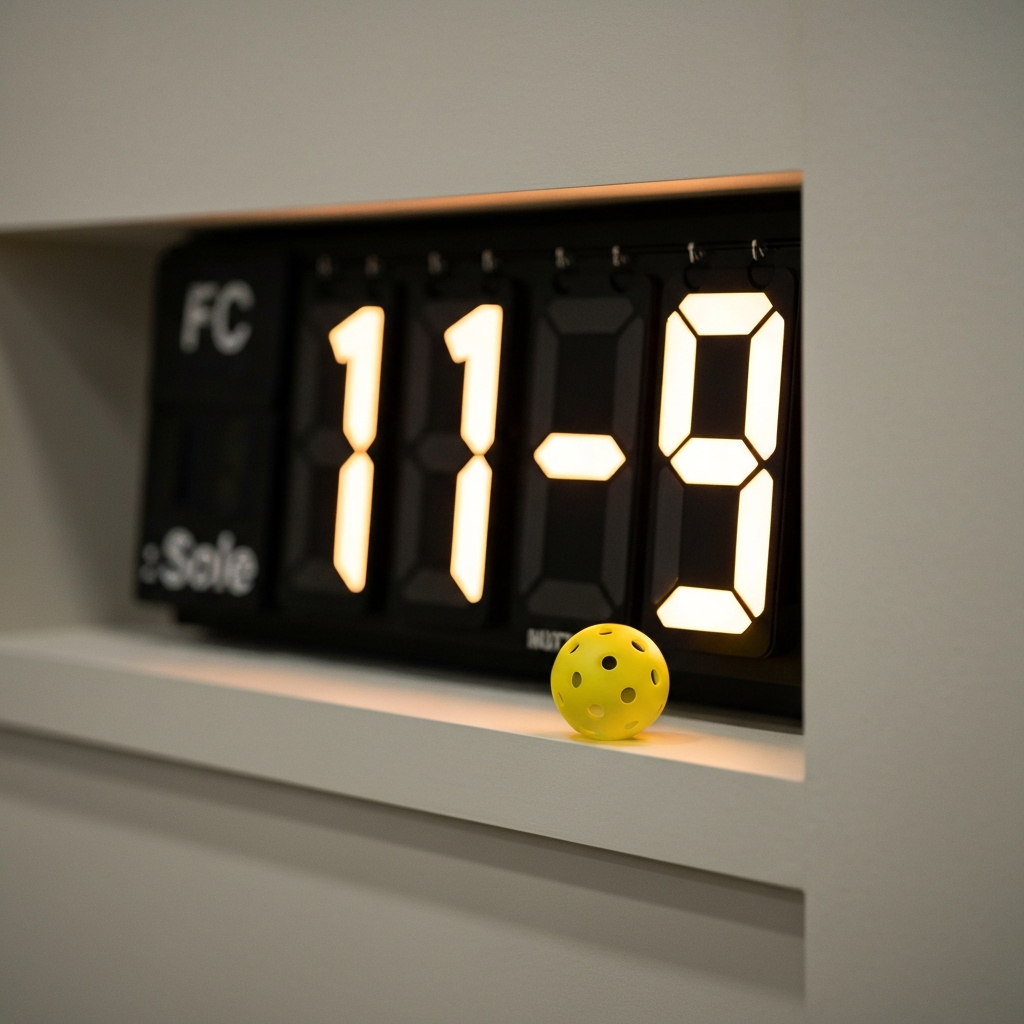
A pickleball game is typically played to 11 points, but with a crucial caveat: you must win by at least two points. If the score reaches 10-10, play continues until one team gains a two-point lead (e.g., 12-10, 15-13). Some tournaments or recreational games might use different scoring formats, such as playing to 15 or 21, but the two-point win rule generally applies.
Pro Tips
- Always double-check the score before serving, especially in doubles, to avoid confusion and potential disputes.
- If you're unsure of the score, politely ask the opposing team to confirm. Honesty and sportsmanship are paramount.
- Practice calling out the score clearly and confidently. This will help you stay focused and avoid errors.
FAQ Section
- Q: What happens if I call the wrong score?
- A: If a wrong score is called, correct it as soon as the error is noticed. If a point has been played with the incorrect score, the point stands, but the score is corrected for the next serve.
- Q: What is a "side-out?"
- A: A "side-out" occurs when the serving team commits a fault and loses the serve to the other team.
- Q: In doubles, how do we know who serves first each time our team gains the serve?
- A: The player on the right side of the court always serves first when your team gains the serve.
Conclusion
Mastering pickleball scoring is essential for enjoying the game and competing effectively. By understanding the serving rules, point allocation, and the intricacies of doubles scoring, you'll be well-equipped to navigate any pickleball match with confidence. Remember the key principles: serve to score, call out the score accurately, and always strive for good sportsmanship. Now, grab your paddle and put your scoring knowledge to the test!