Taekwondo, the Korean art of self-defense, is a dynamic and powerful martial art renowned for its emphasis on kicking techniques. Translating to "The Way of the Foot and the Fist," Taekwondo combines physical prowess with mental discipline, offering practitioners a pathway to improved fitness, self-confidence, and self-defense skills. Whether you're drawn to the sport for its competitive aspect, its self-defense applications, or simply for the challenge of learning a new skill, this guide will provide a solid foundation in the fundamental elements of Taekwondo.
This guide is designed to walk you through the essential stances, kicks, punches, and blocks that form the bedrock of Taekwondo. We'll break down each technique into manageable steps, providing practical tips and advice to help you master the basics. Remember that consistency and proper form are key to success. While this guide offers a strong starting point, it's highly recommended that you seek guidance from a qualified Taekwondo instructor to ensure correct technique and prevent injuries.
Embarking on your Taekwondo journey can be an exciting and rewarding experience. Let's begin!
Step 1: Mastering the Stances
1.1 Attention Stance (Charyot Seogi)
The Attention Stance is the foundational posture in Taekwondo. It's a stance of respect, readiness, and mental focus, used to begin and end forms (Poomsae) and training sessions. To assume the Attention Stance, stand tall with your feet together, heels touching, and toes pointing slightly outward. Keep your back straight, shoulders relaxed, and arms straight down at your sides. Your hands should be slightly cupped, with fingers together.
Distribute your weight evenly on both feet and maintain a straight gaze forward. It's crucial to maintain a sense of alertness and poise. The attention stance is not merely a static position but a state of heightened awareness. A common mistake is to slouch or look down; maintain good posture and eye contact.
1.2 Ready Stance (Junbi Seogi)
The Ready Stance is your primary fighting stance, allowing you to move quickly and execute techniques effectively. Begin from the Attention Stance. Step your left foot out to the side, approximately shoulder-width apart. Bend your knees slightly, lowering your center of gravity. Make a fist with both hands and position them at your waist level, about one fist distance apart, palms facing upwards.
Your weight should be balanced evenly between both legs. Maintain a relaxed but alert posture. This stance should feel comfortable and stable, enabling you to react swiftly to any situation. Avoid locking your knees or tensing your shoulders. Practice transitioning smoothly from the Attention Stance to the Ready Stance. This transition should become fluid and natural. Remember to breathe deeply and maintain a focused mental state.
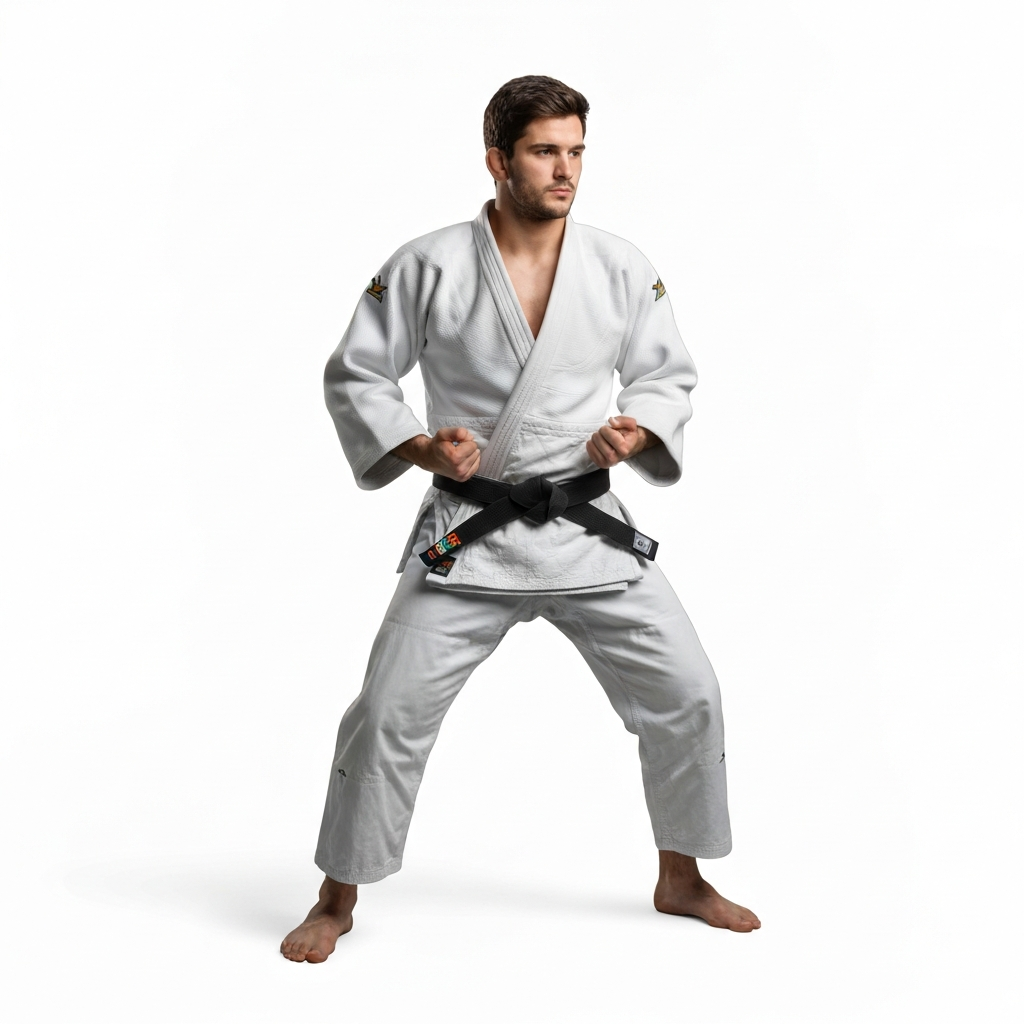
1.3 Horse Stance (Juchum Seogi)
The Horse Stance is a powerful stance used for developing leg strength and stability. Stand with your feet wider than shoulder-width apart, toes pointing slightly outward. Bend your knees deeply, as if you are sitting on a horse. Your thighs should be parallel to the ground. Keep your back straight and your core engaged. Extend your arms out to the sides for balance, or place your hands on your hips.
Hold the Horse Stance for as long as you can maintain proper form. Start with 30 seconds and gradually increase the duration as your strength improves. A common mistake is to lean forward or let your knees cave inward; maintain a straight back and keep your knees aligned with your ankles. The Horse Stance is challenging but essential for developing the lower body strength required for Taekwondo techniques.
Step 2: Mastering Basic Kicks
2.1 Front Kick (Ap Chagi)
The Front Kick is a fundamental Taekwondo kick used for both offense and defense. Begin in a fighting stance. Bring your kicking knee up towards your chest, chambering the kick. Extend your leg forward, snapping your foot out towards your target. Aim to strike with the ball of your foot. Retract your leg quickly, returning to the chambered position, and then lower your foot back to the ground.
Focus on maintaining balance throughout the kick. Common mistakes include leaning back or not chambering the kick properly. Practice the kick slowly at first, focusing on technique and control, gradually increasing speed and power. Exhale sharply as you execute the kick. The front kick is a key tool for both attacking and maintaining distance.
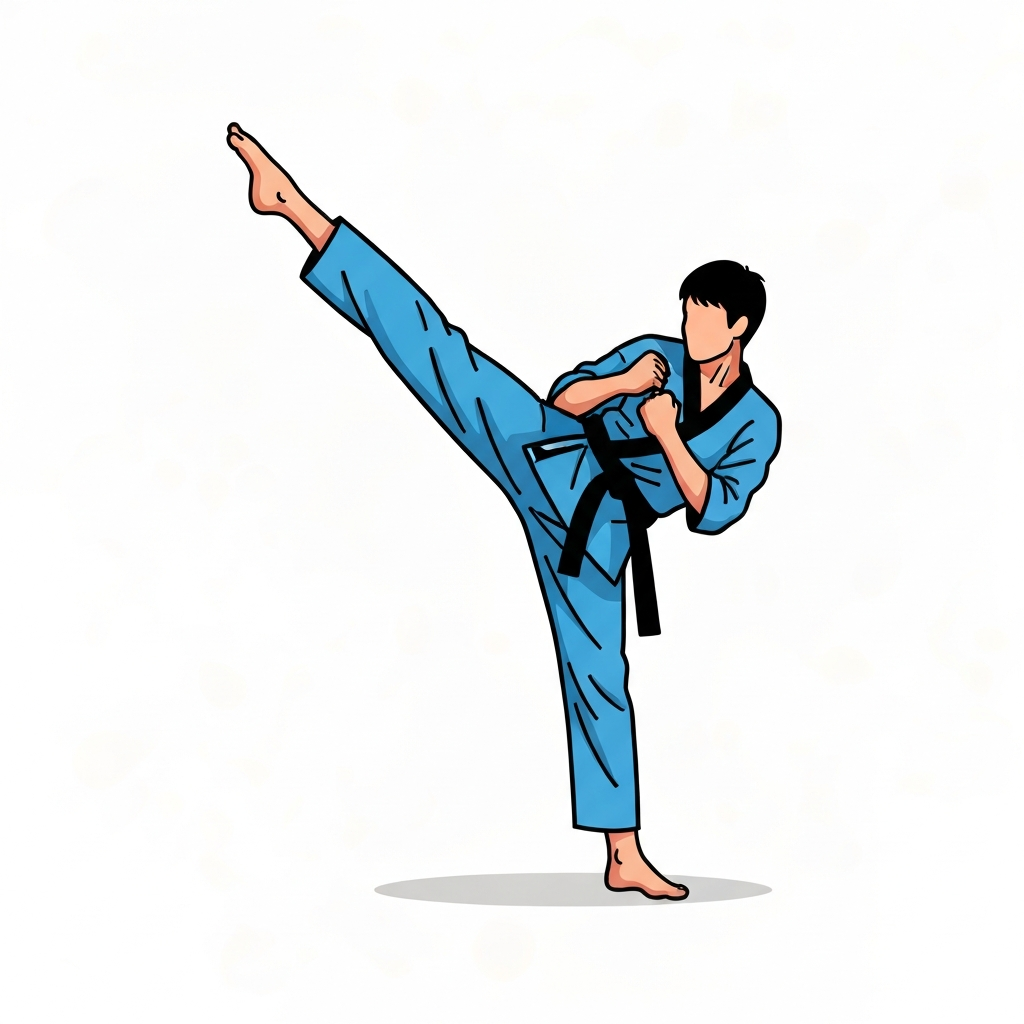
2.2 Roundhouse Kick (Dollyo Chagi)
The Roundhouse Kick is a versatile and powerful kick used for delivering a strong blow to the opponent's torso or head. Begin in a fighting stance. Bring your kicking knee up and across your body, rotating your supporting foot. Extend your leg in a circular motion, striking with the instep of your foot. Focus on pivoting your supporting foot and rotating your hips to generate power.
Retract your leg quickly, returning to the chambered position, and then lower your foot back to the ground. Practice pivoting your supporting foot correctly to maximize power and prevent injury. Common mistakes include not rotating the hips enough or not chambering the kick properly. Focus on generating power from your hips and core. Visualizing the trajectory of the kick can greatly improve accuracy and power. Remember to maintain a stable base throughout the kick. The roundhouse kick is a staple technique in Taekwondo, offering both offensive and defensive capabilities.
Step 3: Mastering Basic Punches
3.1 Straight Punch (Jireugi)
The Straight Punch, also known as a direct punch, is a fundamental Taekwondo technique. Start in your fighting stance. Make a fist, ensuring your thumb is tucked outside of your fingers. Extend your punching arm straight out from your body, rotating your fist so that your palm faces downwards at the point of impact. Simultaneously, pull your other hand back to your waist, maintaining a guarding position.
Focus on rotating your hips slightly to generate power from your core. Retract your punching arm quickly, returning to the guard position. Common mistakes include telegraphing the punch (giving it away before it's thrown) or not fully extending the arm. Focus on maintaining a tight fist and keeping your wrist straight to avoid injury. The straight punch is an essential tool for both offense and defense, offering a quick and direct striking option.
Step 4: Mastering Basic Blocks
4.1 Low Block (Arae Makgi)
The Low Block is a defensive technique used to protect against attacks aimed at the lower body. Start in your ready stance. Bring the blocking arm across your body, starting near your opposite shoulder. Swing your arm downwards and outwards, blocking the incoming attack with your forearm. Your blocking arm should end up near your lower abdomen, angled slightly outwards.
The other arm remains in a guard position, protecting your face. Focus on using your entire forearm to block the attack, rather than just your wrist or hand. Common mistakes include not bringing the blocking arm far enough across the body or using too much force. Maintain a strong and stable stance throughout the block. The Low Block is crucial for protecting against kicks and other lower-body attacks. Remember to keep your focus on the attacker and be ready to counterattack.
4.2 High Block (Olgul Makgi)
The High Block is a defensive technique designed to protect against attacks aimed at the head. Begin in your ready stance. Bring the blocking arm up across your body, starting near your opposite hip. Raise your forearm upwards and outwards, blocking the incoming attack above your head. The blocking arm should end up angled slightly outwards, protecting your face and head.
The other arm remains in a guard position, protecting your torso. Focus on using your entire forearm to block the attack. Common mistakes include not raising the blocking arm high enough or not maintaining a strong stance. Remember to keep your eyes on the attacker and be ready to counterattack. The High Block is an essential defensive tool for protecting against punches and kicks aimed at the head.
Safety Considerations
Taekwondo, like any martial art, carries a risk of injury. Always warm up properly before training, including stretching and light cardio. Use proper protective gear, such as mouthguards and shin guards, during sparring. Listen to your body and avoid pushing yourself too hard, especially when you are first starting out. Consult with a doctor before beginning any new exercise program. It is highly recommended to train under the guidance of a qualified instructor to ensure correct technique and prevent injuries.
Common Mistakes to Avoid
- Poor Stance: Not maintaining a balanced and stable stance can severely limit your power and control.
- Telegraphing Movements: Giving away your intentions before executing a technique allows your opponent to anticipate and counter.
- Lack of Focus: Mental focus is crucial in Taekwondo. Distractions can lead to errors and injuries.
- Skipping Warm-Ups: Neglecting warm-ups increases the risk of muscle strains and other injuries.
- Ignoring Feedback: Not listening to your instructor's corrections will hinder your progress.
Pro Tips
- Practice Regularly: Consistent practice is key to improving your skills. Aim for at least 30 minutes of practice several times a week.
- Visualize Your Techniques: Mental rehearsal can help improve your technique and coordination.
- Focus on Form: Prioritize proper form over speed and power. Speed and power will come naturally with correct technique.
- Seek Feedback: Ask your instructor for feedback on your technique and areas for improvement.
- Record Yourself: Videoing your practice sessions can help you identify and correct mistakes.
FAQ Section
- How long does it take to learn the basics of Taekwondo?
- It typically takes several months of consistent training to master the basic stances, kicks, punches, and blocks. The exact time frame depends on your individual aptitude, dedication, and the frequency of your training sessions.
- Can I learn Taekwondo at home?
- While you can practice basic techniques at home, it's highly recommended to train under the guidance of a qualified instructor to ensure correct form and prevent injuries. A dojang (Taekwondo school) provides a structured learning environment and access to experienced instructors who can provide personalized feedback.
- What equipment do I need to start Taekwondo?
- Initially, you may only need comfortable workout clothes. As you progress, you may need a uniform (dobok), mouthguard, and other protective gear, especially if you plan to spar.
- Is Taekwondo a good form of self-defense?
- Yes, Taekwondo can be an effective form of self-defense. It teaches you how to strike effectively, defend against attacks, and improve your overall fitness and awareness.
Conclusion
Learning basic Taekwondo is an achievable goal with dedication and practice. Mastering the stances, kicks, punches, and blocks outlined in this guide provides a solid foundation for further advancement in the art. Remember to prioritize proper form, listen to your body, and seek guidance from a qualified instructor. As you progress, you'll not only develop physical skills but also cultivate mental discipline, self-confidence, and a deeper understanding of this dynamic martial art. Good luck on your Taekwondo journey!