Building impressive arms is a common fitness goal for many. While aesthetics play a significant role, achieving a well-developed physique also contributes to overall strength and functional fitness. Aiming for 15-inch arms is a respectable goal, signifying above-average muscular development and dedication to training.
This comprehensive guide provides a detailed roadmap for achieving this goal. We'll cover essential exercises, training strategies, nutritional considerations, and crucial recovery methods. Whether you're a beginner or an experienced lifter, this guide offers valuable insights to maximize your arm growth potential.
Remember that genetics, body composition, and consistency all play crucial roles. While this guide provides a solid framework, individual results may vary. Let's embark on this journey together and sculpt those 15-inch arms!
Step 1: Understanding Arm Anatomy
Before diving into training, it's essential to understand the key muscle groups involved in arm development. The primary players are the biceps brachii (biceps), located on the front of the upper arm, responsible for elbow flexion and forearm supination, and the triceps brachii (triceps), located on the back of the upper arm, responsible for elbow extension. A significant portion of arm mass comes from the triceps. Therefore, balanced training targeting both muscle groups is crucial. Don’t forget about the forearms, as strengthening them will improve your grip, which will improve your lifting strength for other exercises.
Step 2: Establish Your Baseline Measurement
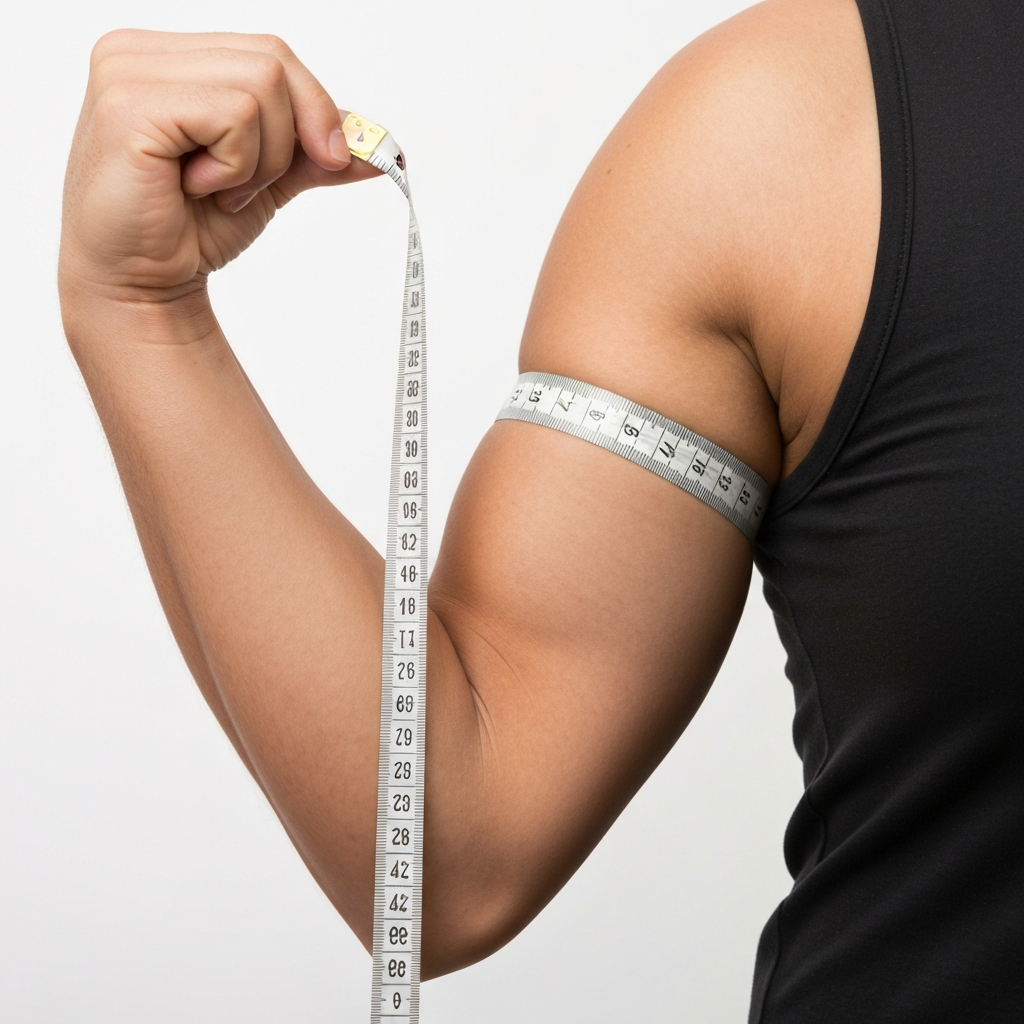
Before starting your training program, accurately measure your current arm size. Use a flexible measuring tape and measure around the largest part of your bicep while flexing. Ensure the tape is snug but not too tight. Measure both arms, as one may be slightly larger than the other. Record these measurements to track your progress accurately. Measuring both before and after a workout will help you see immediate differences.
Step 3: Compound Exercises as the Foundation
Prioritize compound exercises, which work multiple muscle groups simultaneously. These exercises stimulate greater overall muscle growth and hormonal response, indirectly contributing to arm development. Examples include bench presses (targeting chest, triceps, and shoulders), rows (targeting back, biceps, and forearms), overhead presses (targeting shoulders and triceps), and pull-ups/chin-ups (targeting back, biceps, and forearms). Include these exercises at the beginning of your workouts when you are fresh and can lift the heaviest weight.
Step 4: Biceps Isolation Exercises
Supplement compound exercises with isolation exercises specifically targeting the biceps. Effective bicep exercises include barbell curls, dumbbell curls (various grips), hammer curls, concentration curls, and preacher curls. Focus on controlled movements and full range of motion to maximize muscle fiber recruitment. Aim for 3-4 sets of 8-12 repetitions for each exercise. Try to incorporate different variations of curls to target the biceps from different angles. For example, incline dumbbell curls will target the long head of the bicep, while hammer curls will target the brachialis.
Step 5: Triceps Isolation Exercises
Equally important is dedicated triceps training. Incorporate exercises such as close-grip bench presses, overhead triceps extensions (dumbbell or cable), skullcrushers, triceps pushdowns (cable or resistance band), and dips. Vary your grip and hand position to target different heads of the triceps muscle. Aim for 3-4 sets of 8-12 repetitions for each exercise. Triceps make up most of the arm, so it’s important to prioritize them in your training.
Step 6: Forearm Training
Don't neglect forearm training, as strong forearms enhance grip strength and overall arm aesthetics. Include exercises such as wrist curls (palms up and down), reverse wrist curls, and farmer's walks. Stronger forearms improve the stability of your wrist, which can prevent injury in other exercises. Aim for 2-3 sets of 12-15 repetitions for each exercise.
Step 7: Progressive Overload
Progressive overload is the key to continuous muscle growth. Gradually increase the weight, repetitions, or sets you perform over time. This forces your muscles to adapt and become stronger, leading to hypertrophy (muscle growth). Track your workouts and strive to improve each session. Start with a weight you can control with good form, and gradually increase the weight as you get stronger. Consider increasing the weight by small increments (2.5 lbs or 5 lbs) to avoid compromising your form.
Step 8: Training Frequency
Aim to train your arms 2-3 times per week, allowing adequate rest and recovery between sessions. Overtraining can hinder muscle growth and increase the risk of injury. A typical split could involve dedicating one day solely to arm training, and another day incorporating arm exercises into a full-body or upper/lower split. Listen to your body and adjust the frequency as needed. For example, if your arms are still sore from the previous workout, consider taking an extra day of rest.
Step 9: Proper Form and Technique
Prioritize proper form and technique over lifting heavy weights. Using incorrect form can lead to injuries and reduce the effectiveness of the exercise. Watch videos, consult with a trainer, or use mirrors to ensure you're performing exercises correctly. Focus on controlled movements and squeezing the target muscles throughout the entire range of motion. It is better to lift lighter with better form than to try and push your weight too fast.
Step 10: Nutrition for Muscle Growth
Nutrition plays a crucial role in muscle growth. Consume a balanced diet rich in protein, carbohydrates, and healthy fats. Protein is essential for muscle repair and growth. Aim for approximately 1 gram of protein per pound of body weight per day. Good sources of protein include lean meats, poultry, fish, eggs, dairy, beans, and lentils. Carbohydrates provide energy for workouts, and healthy fats support hormone production and overall health. It may be beneficial to supplement with protein powder to reach your protein goals.
Step 11: Caloric Surplus
To build muscle, you need to consume slightly more calories than you burn (a caloric surplus). This provides your body with the energy needed to repair and build muscle tissue. Aim for a surplus of 250-500 calories per day. Track your calorie intake using a food diary or app to ensure you're meeting your caloric goals. Avoid excessive caloric surplus, as this can lead to unwanted fat gain.
Step 12: Rest and Recovery
Adequate rest and recovery are crucial for muscle growth. Aim for 7-9 hours of sleep per night. During sleep, your body releases growth hormone, which is essential for muscle repair and growth. Avoid overtraining and allow your muscles sufficient time to recover between workouts. Consider incorporating rest days into your training schedule. Active recovery, such as light cardio or stretching, can also help improve blood flow and reduce muscle soreness.
Step 13: Hydration
Staying hydrated is essential for overall health and performance. Water transports nutrients to your muscles and helps remove waste products. Drink plenty of water throughout the day, especially before, during, and after workouts. Aim for at least 8 glasses of water per day. Dehydration can lead to decreased performance, muscle cramps, and fatigue.
Step 14: Consistency and Patience
Building 15-inch arms takes time, consistency, and patience. Don't get discouraged if you don't see results immediately. Stick to your training plan, eat a healthy diet, and prioritize rest and recovery. Track your progress and celebrate your achievements along the way. Remember that everyone's body is different, and results may vary. Focus on making consistent progress and enjoying the process.
Step 15: Monitor and Adjust
Regularly monitor your progress and adjust your training plan as needed. If you're not seeing results, consider changing your exercises, increasing the weight, adjusting your training frequency, or modifying your diet. Consult with a qualified personal trainer or healthcare professional for personalized guidance. Be open to experimenting and finding what works best for your body.
Common Mistakes to Avoid
- Neglecting Triceps: Many people focus solely on biceps training, forgetting that the triceps contribute significantly to arm size.
- Using Poor Form: Prioritizing weight over form can lead to injuries and hinder muscle growth.
- Overtraining: Training arms too frequently without adequate rest can prevent muscle recovery and growth.
- Inconsistent Nutrition: Not consuming enough protein or calories can hinder muscle growth.
Safety Considerations
- Always warm up before each workout.
- Use proper form and technique.
- Lift weights that are challenging but manageable.
- Use a spotter when lifting heavy weights.
- Listen to your body and stop if you experience pain.
Pro Tips
- Incorporate drop sets and supersets to increase intensity.
- Use a variety of grips to target different parts of the muscles.
- Focus on the eccentric (lowering) portion of each exercise.
- Consider using creatine to enhance muscle growth and strength.
FAQ Section
- How long will it take to build 15-inch arms?
- The timeframe varies depending on genetics, training experience, and consistency. It could take several months to a year or more.
- What is the best arm workout?
- The best workout depends on individual goals and preferences. A well-rounded routine includes compound and isolation exercises for both biceps and triceps.
- Do I need supplements to build muscle?
- Supplements are not essential, but they can be helpful. Protein powder and creatine are popular choices for muscle growth.
Conclusion
Achieving 15-inch arms is a challenging but attainable goal. By following this comprehensive guide, incorporating effective exercises, prioritizing proper nutrition and rest, and remaining consistent, you can maximize your arm growth potential. Remember to be patient, listen to your body, and celebrate your progress along the way. Good luck on your journey to building impressive arms!