Dimples, those charming indentations on the skin, have captivated observers for centuries. Often associated with youthfulness and attractiveness, dimples are far more diverse than many realize. While cheek dimples are the most commonly recognized, they are just one facet of a broader range of dimple types that can occur across the human body. This guide will explore the various forms dimples can take, delving into their causes and characteristics.
From the classic cheek dimples that appear with a smile to the more subtle indentations found on the chin or back, each type of dimple possesses unique qualities. Understanding the different classifications of dimples not only provides insight into human anatomy but also allows for a greater appreciation of the subtle variations in facial and bodily features. Prepare to embark on a fascinating journey into the world of dimples, where we'll uncover the secrets behind these intriguing skin indentations.
Whether you're curious about the science behind dimple formation or simply interested in learning more about the diverse ways they manifest, this guide offers a detailed exploration of the subject. We will cover the genetic factors, muscle structures, and various other elements that contribute to the development of different types of dimples. By the end of this guide, you'll possess a comprehensive understanding of the diverse world of dimples and the fascinating science behind them.
Step 1: Understanding Cheek Dimples
Bilateral vs. Unilateral Cheek Dimples
Cheek dimples are perhaps the most widely recognized type of dimple. They are often caused by variations in the zygomaticus major muscle, which plays a crucial role in facial expression. The key distinction lies in whether the dimples appear on both cheeks (bilateral) or just one (unilateral). Bilateral dimples are symmetrical and appear on both sides of the face, while unilateral dimples are present only on one cheek, creating an asymmetrical yet often equally endearing appearance. The presence of bilateral dimples is generally considered more common, however, unilateral dimples provide a striking and unique feature. When analyzing cheek dimples, consider their placement relative to the smile lines and the depth of the indentation.

Step 2: Exploring Facial Dimple Variations
Longitudinal, Transverse, and Fovea Buccalis Dimples
Beyond the simple presence or absence of dimples on each cheek, further classifications exist based on the orientation and location of the dimple itself. Longitudinal dimples appear as vertical indentations on the cheek, becoming more pronounced when smiling. Transverse, or horizontal dimples, as the name indicates, appear as a horizontal indentation. While less common than longitudinal dimples, transverse dimples offer a unique and distinctive feature. Then there are Fovea buccalis dimples that are located higher on the cheek, closer to the corners of the mouth. These are less deep and less common than other cheek dimples. When examining these variations, pay attention to the angle of light, as it can dramatically affect how visible the dimple is.
Step 3: Discovering Dahlia Dimples
Smile Lines vs. True Dahlia Dimples
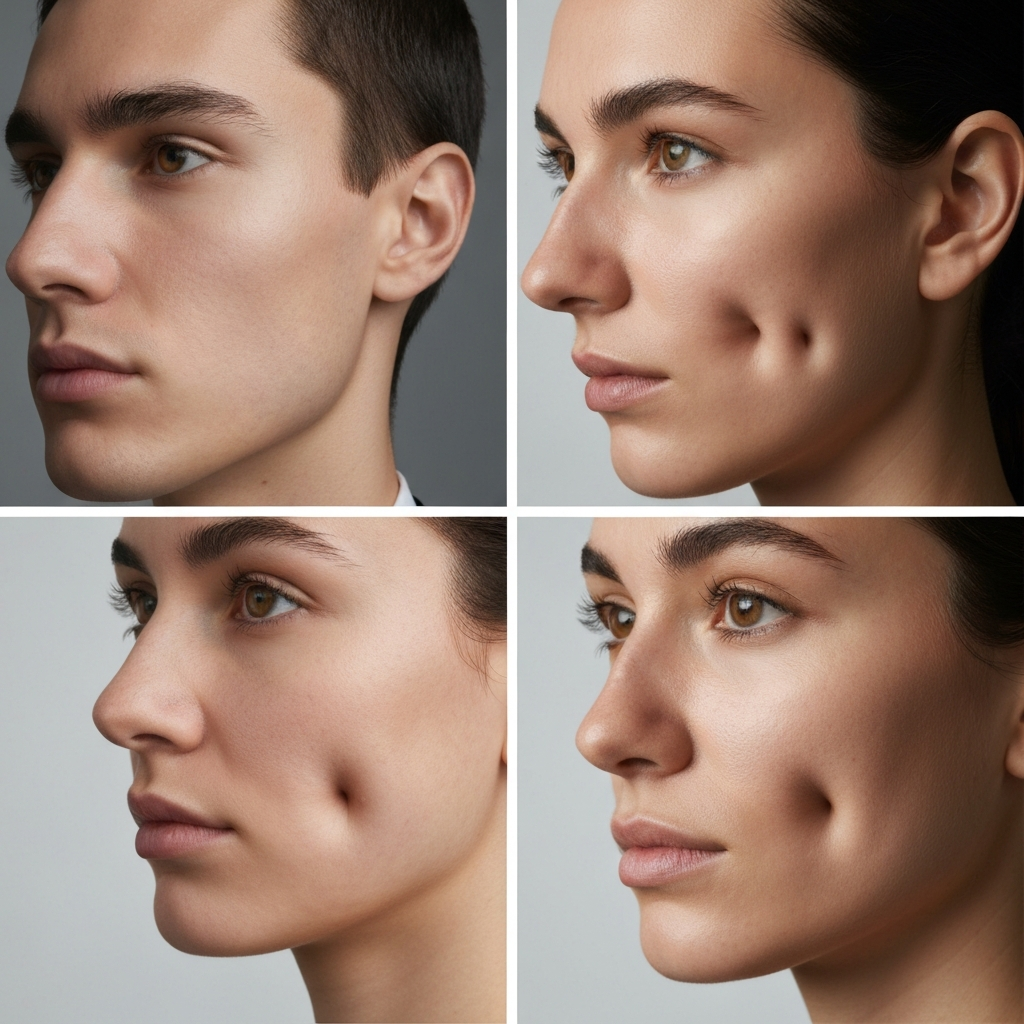
Dahlia dimples have gained popularity through social media, often described as dimples near the smile lines. However, a true Dahlia dimple is found on the flat part of the skin, whereas a typical smile line is simply the crease where the cheek folds next to the mouth. Distinguishing between a true Dahlia dimple and a smile line crease is essential. While smile lines are natural creases that develop with age and repeated facial expressions, Dahlia dimples are indentations similar to other dimples, stemming from variations in muscle structure. Evaluating the placement and characteristics is important for identification. To check, smile in the mirror; a dimple that resides on a flat area of skin MAY be a Dahlia dimple. If the indentation matches where the cheek folds to meet the area near the mouth, it is likely a smile line.

Step 4: Investigating Chin Dimples
Cleft Chin and Fovea Inferior
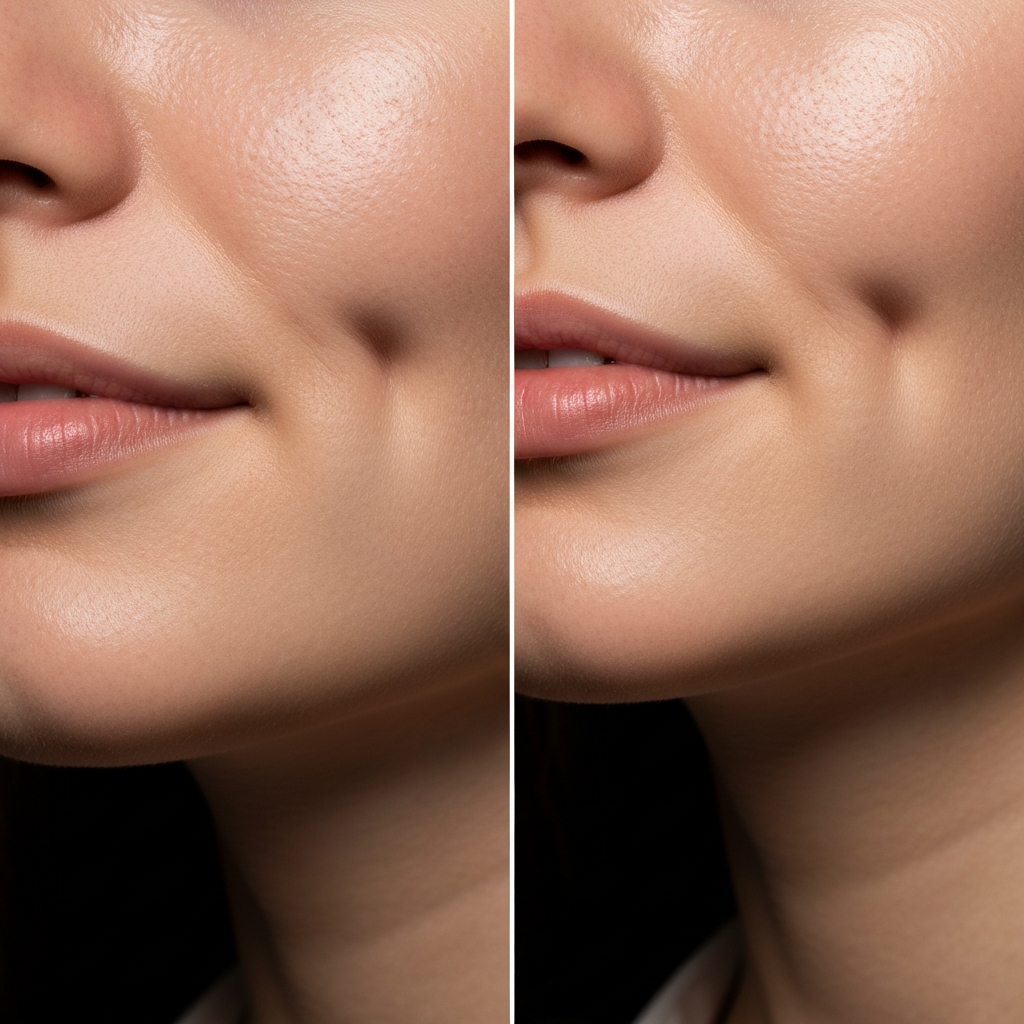
Dimples are not limited to the cheeks. Chin dimples, commonly known as cleft chins, are a prevalent example. A cleft chin is caused by an incomplete fusion of the jawbone during development, resulting in a vertical indentation in the center of the chin. Another, much rarer, chin dimple is fovea inferior. This dimple forms just below the corner of the mouth and is most visible when smiling. These types of dimples showcase the versatility of dimple formation across different anatomical areas.
Step 5: Exploring Body Dimples
Back Dimples (Dimples of Venus) and Sacral Dimples
Beyond the face, dimples can also be found on other parts of the body. Back dimples, often referred to as "Dimples of Venus," are indentations located on the lower back, above the buttocks. They are formed by the ligaments connecting the skin to the sacrum and are often considered an attractive feature. Sacral dimples are commonly found on newborns, located just above the crease of the butt. While typically harmless, sacral dimples accompanied by other unusual features may indicate underlying spinal issues and require medical attention. Therefore, proper monitoring of sacral dimples, especially in infants, is important.
Step 6: Examining Cellulite
The Dimpled Appearance of Cellulite
Cellulite presents a unique case of body dimpling. It forms when fat deposits beneath the skin gather, leading to rippled, bumpy, or dimpled areas, most commonly on the thighs and buttocks. While technically considered dimples, cellulite differs from the other types discussed as it is a condition affecting the skin's appearance rather than a structural feature caused by muscle or bone variations. Cellulite is prevalent, especially in women, and is a completely natural phenomenon.

FAQ Section
Q: Are dimples hereditary?
A: The exact cause of dimples is still under scientific investigation; however, most believe it to be a genetic trait.
Q: Can I develop dimples later in life?
A: Weight changes can sometimes make dimples more or less apparent, and cosmetic surgery can be used to create the appearance of dimples.
Q: Are dimples considered attractive?
A: Dimples are often considered an attractive feature, associated with youthfulness and charm.
Conclusion
As we've explored, dimples are diverse and fascinating features that extend beyond the commonly recognized cheek dimples. From longitudinal and transverse cheek dimples to cleft chins, Dimples of Venus, and even cellulite, each type possesses unique characteristics and causes. Understanding the variations in dimple formation not only provides insight into human anatomy and genetics but also allows for a deeper appreciation of the subtle nuances that make each individual unique. So, the next time you see someone with dimples, remember that you're observing just one facet of a diverse and captivating phenomenon.