A properly sealed kitchen sink is essential for preventing water damage, mold growth, and costly repairs. Over time, the caulk around your sink can crack, shrink, or peel away, leaving gaps that allow water to seep underneath. Fortunately, re-caulking a kitchen sink is a relatively straightforward DIY project that can save you money and protect your home. This comprehensive guide will walk you through each step, ensuring a professional-looking and long-lasting seal.
Before you begin, it's important to understand that preparation is key. Rushing the process or neglecting to properly clean and dry the area will result in a failed caulk job. Take your time, follow these steps carefully, and you'll have a watertight seal in no time.
This guide focuses on using silicone caulk, which is known for its flexibility, water resistance, and longevity in wet environments. While other types of caulk exist, silicone is generally the best choice for kitchen sinks.
Step 1: Gather Your Tools and Materials
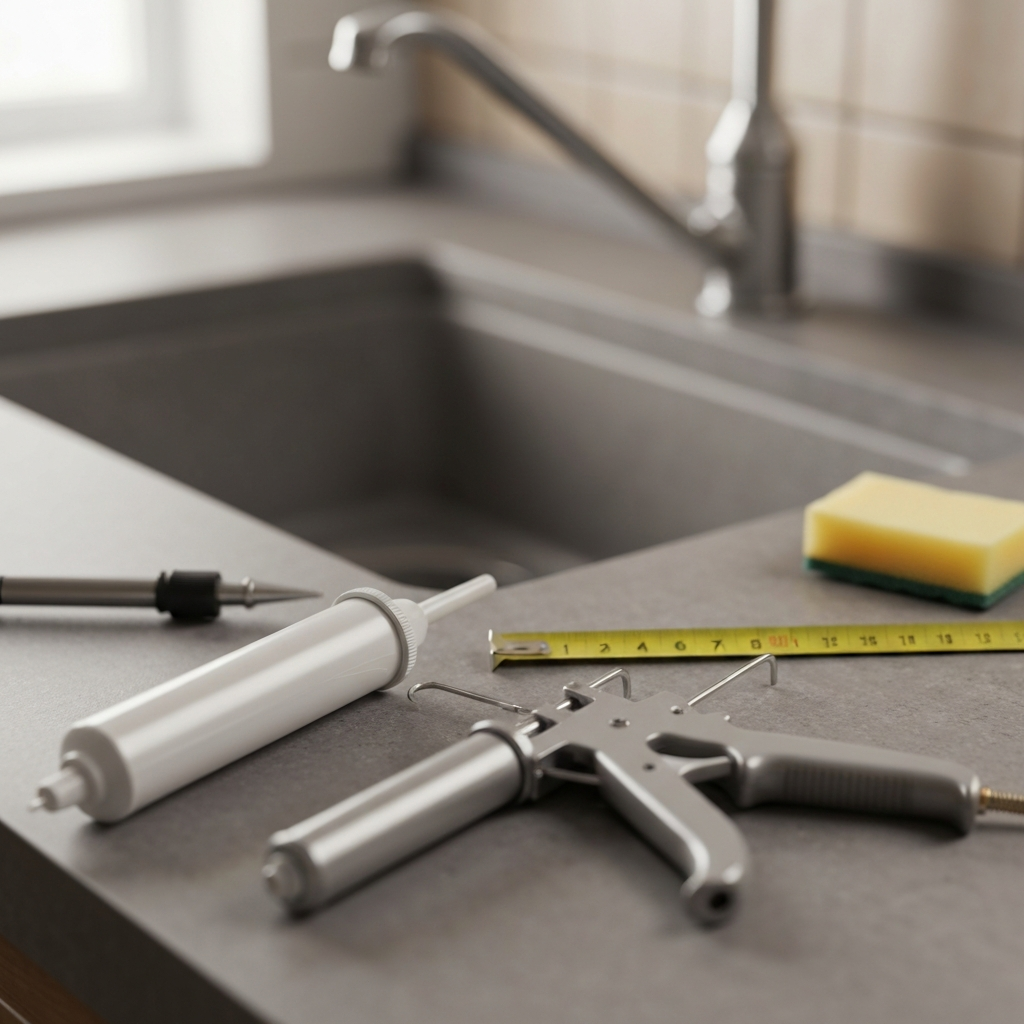
Before you start, make sure you have everything you need. This will save you time and frustration later. Here’s a comprehensive list:
- Caulk gun
- Silicone caulk (specifically designed for kitchens and bathrooms)
- Utility knife or caulk removal tool
- Scraper or putty knife
- Rubbing alcohol
- Clean cloths or paper towels
- Painter's tape
- Spray bottle with water
- Small bowl of soapy water
- Gloves (optional, but recommended)
Step 2: Remove the Old Caulk
This is arguably the most important step, as any remaining old caulk will prevent the new caulk from adhering properly. Using a utility knife or specialized caulk removal tool, carefully slice along both edges of the old caulk bead, where it meets the sink and the countertop. Be careful not to scratch the sink or countertop surface. Once you've scored the edges, try to peel away the old caulk. You may need to use a scraper or putty knife to remove stubborn pieces. For difficult spots, a caulk remover solvent can be used, but be sure to follow the manufacturer's instructions and test it in an inconspicuous area first to ensure it doesn't damage your surfaces.
Pro Tip: A heat gun or hair dryer can soften the old caulk, making it easier to remove. Be careful not to overheat the area, especially if you have a laminate countertop.
Step 3: Thoroughly Clean the Area
After removing the old caulk, it's crucial to clean the area thoroughly. Use a scraper or putty knife to remove any remaining residue. Next, scrub the area with a solution of soapy water to remove any dirt, grease, or grime. Rinse well with clean water and then wipe down the surfaces with rubbing alcohol. The rubbing alcohol will help to remove any remaining contaminants and promote adhesion of the new caulk. Allow the area to dry completely before proceeding. This may take several hours, depending on the humidity in your area.
Step 4: Apply Painter's Tape
Applying painter's tape will help you create a clean, professional-looking caulk line. Apply the tape to both the sink and the countertop, leaving a small gap (about 1/8 inch) between the tape and the edge where you want the caulk to go. The tape should be parallel to the sink edge. This will act as a guide and prevent caulk from getting where you don't want it. Take your time and ensure the tape is applied smoothly and evenly.
Step 5: Prepare the Caulk Gun and Cartridge
Cut the tip of the caulk cartridge at a 45-degree angle, using a utility knife. The size of the opening will determine the width of the caulk bead. Start with a small opening and increase it if necessary. Puncture the seal inside the cartridge using the tool provided on the caulk gun or a long nail. Load the cartridge into the caulk gun, making sure it's securely in place. Practice squeezing the trigger a few times on a piece of cardboard to get a feel for how much caulk is dispensed with each squeeze.

Step 6: Apply the Caulk
Position the tip of the caulk gun at the beginning of the seam between the sink and the countertop. Apply steady, even pressure to the trigger, moving the gun along the seam in a smooth, continuous motion. Maintain a consistent speed to create a uniform bead of caulk. Overlapping the old sealant isn't recommended as this can create pockets of air and eventually fail. If you need to stop and restart, overlap the new bead slightly with the existing one. Avoid applying too much caulk, as it's easier to remove excess than to add more.
Step 7: Smooth the Caulk Bead
Immediately after applying the caulk, smooth the bead with your finger or a caulk-smoothing tool. Dip your finger in a small bowl of soapy water to prevent the caulk from sticking. Apply gentle pressure and run your finger along the bead in a smooth, continuous motion. This will create a concave shape and ensure a watertight seal. Wipe off any excess caulk from your finger or tool with a clean cloth or paper towel. A caulk smoothing tool can be a good alternative if you prefer not to use your finger or want a very uniform finish.
Step 8: Remove the Painter's Tape
Carefully remove the painter's tape while the caulk is still wet. Pull the tape away at a 45-degree angle to avoid pulling the caulk away from the seam. This will leave a clean, crisp caulk line. If any caulk gets pulled up with the tape, smooth it out with your finger or a caulk-smoothing tool.
Step 9: Clean Up and Allow to Dry
Use a damp cloth or paper towel to wipe away any excess caulk from the sink and countertop. Allow the caulk to dry completely according to the manufacturer's instructions. This typically takes 24-48 hours. Avoid using the sink during this time to ensure the caulk cures properly and forms a strong, watertight seal.
Safety Considerations
- Always wear gloves to protect your hands from the caulk and cleaning solutions.
- Work in a well-ventilated area to avoid inhaling fumes from the caulk or caulk remover.
- Be careful when using a utility knife to avoid cuts.
- Dispose of used caulk cartridges and cleaning materials properly.
Common Mistakes to Avoid
- Not removing all of the old caulk: This is the most common mistake and will result in a failed caulk job.
- Applying caulk to a wet or dirty surface: The caulk will not adhere properly.
- Using the wrong type of caulk: Use silicone caulk specifically designed for kitchens and bathrooms.
- Applying too much caulk: It's easier to remove excess than to add more.
- Not smoothing the caulk bead: This will result in a weak and unsightly seal.
- Using the sink before the caulk is fully cured: This will prevent the caulk from forming a strong, watertight seal.
FAQ Section
- How often should I re-caulk my kitchen sink?
- Typically, you should re-caulk your kitchen sink every 1-2 years, or whenever you notice cracks, shrinkage, or peeling in the existing caulk.
- Can I use any type of caulk for my kitchen sink?
- No, it's important to use a silicone caulk that is specifically designed for kitchens and bathrooms. These caulks are formulated to resist water, mold, and mildew.
- How do I clean up excess caulk?
- Use a damp cloth or paper towel to wipe away any excess caulk. You can also use mineral spirits or rubbing alcohol to remove stubborn residue.
- The caulk is peeling away shortly after I applied it. What went wrong?
- This is usually caused by improper preparation of the surface. Make sure you thoroughly remove all of the old caulk, clean the area with rubbing alcohol, and allow it to dry completely before applying the new caulk.
Conclusion
Re-caulking your kitchen sink is a simple yet effective way to protect your home from water damage and maintain a clean, sanitary environment. By following these steps carefully and avoiding common mistakes, you can achieve a professional-looking and long-lasting seal that will keep your kitchen sink leak-free for years to come. Remember, patience and attention to detail are key to a successful caulk job.