Want to add a touch of flair to your everyday life? Pencil spinning, particularly the elusive middle finger spin, is a surprisingly accessible skill. It’s a fantastic way to improve your finger dexterity, focus your mind, and, let's be honest, impress your friends. While it may appear complex at first, breaking down the movement into manageable steps will have you spinning like a pro in no time.
This guide provides a detailed, step-by-step approach to mastering the middle finger pencil spin. We’ll cover the proper grip, the crucial finger movements, and even offer tips on troubleshooting common mistakes. Get ready to transform a simple pencil into a mesmerizing display of skill!
So, grab your favorite pencil and let's get started on this journey to pencil-spinning mastery. Remember, patience and persistence are key. Even the most skilled spinners started where you are now.
Step 1: The Foundation - Proper Pencil Grip
The initial grip is paramount to a successful spin. Hold the pencil between your middle and ring fingers, positioning it towards the top third of the pencil. The majority of the pencil should dangle behind your fingers. The pencil tip should rest gently on your pointer finger, with the middle section balancing on the tip of your middle finger. Your thumb provides a stabilizing point, resting on top of the pencil between your pointer and middle fingers. This creates a tripod-like hold that will be key to the spin. Don't grip too tightly; the pencil needs to move freely.

Step 2: Initiating the Spin - The Ring Finger Thrust
This is where the magic begins. Keeping your middle finger stiff, firmly thrust your ring finger inward toward your palm. This action provides the initial force that will propel the pencil around your middle finger. Think of it as flicking the pencil, but using your ring finger as the lever. The power of this thrust dictates the momentum of the spin, so avoid hesitation. Practice this movement slowly at first to get a feel for the force required.

Step 3: Creating a Clear Path - Thumb and Pointer Finger Positioning
For the pencil to complete a full rotation around your middle finger, it needs an unobstructed path. Keep your thumb and pointer finger extended outward and as still as possible. These fingers should not interfere with the pencil's trajectory. This might feel awkward at first, but it is essential for a clean spin. Common mistake: flexing your thumb or pointer finger, thus blocking the pencil's rotation.
Step 4: The Catch - Ring Finger Extension
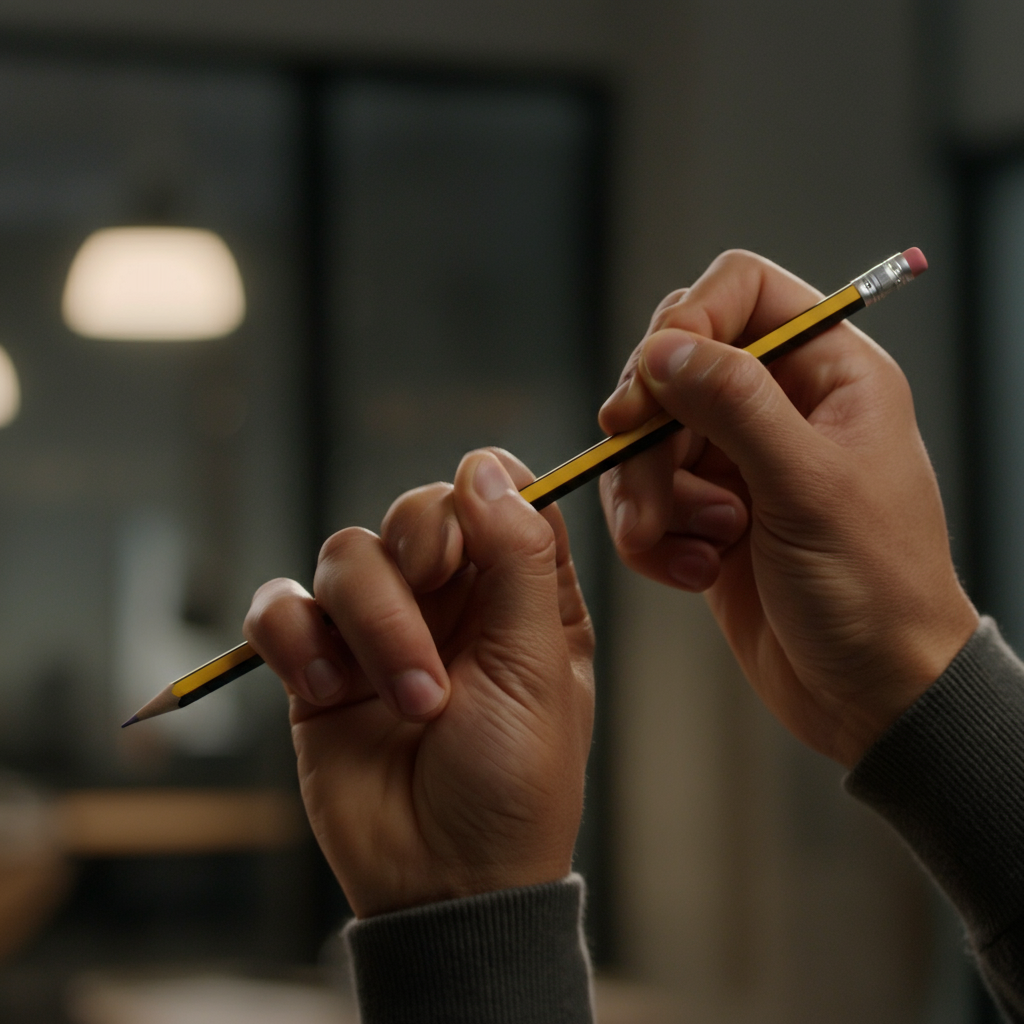
As the pencil completes its revolution around your middle finger, your ring finger will again be critical. As the pencil approaches the starting position, extend your ring finger outward to intercept it. This is often the trickiest part, requiring precise timing and coordination. Anticipate the pencil's return and begin extending your ring finger slightly before it completes the rotation. This ensures a smooth and controlled catch.
Step 5: Secure the Catch - Pinching with Middle and Ring Fingers
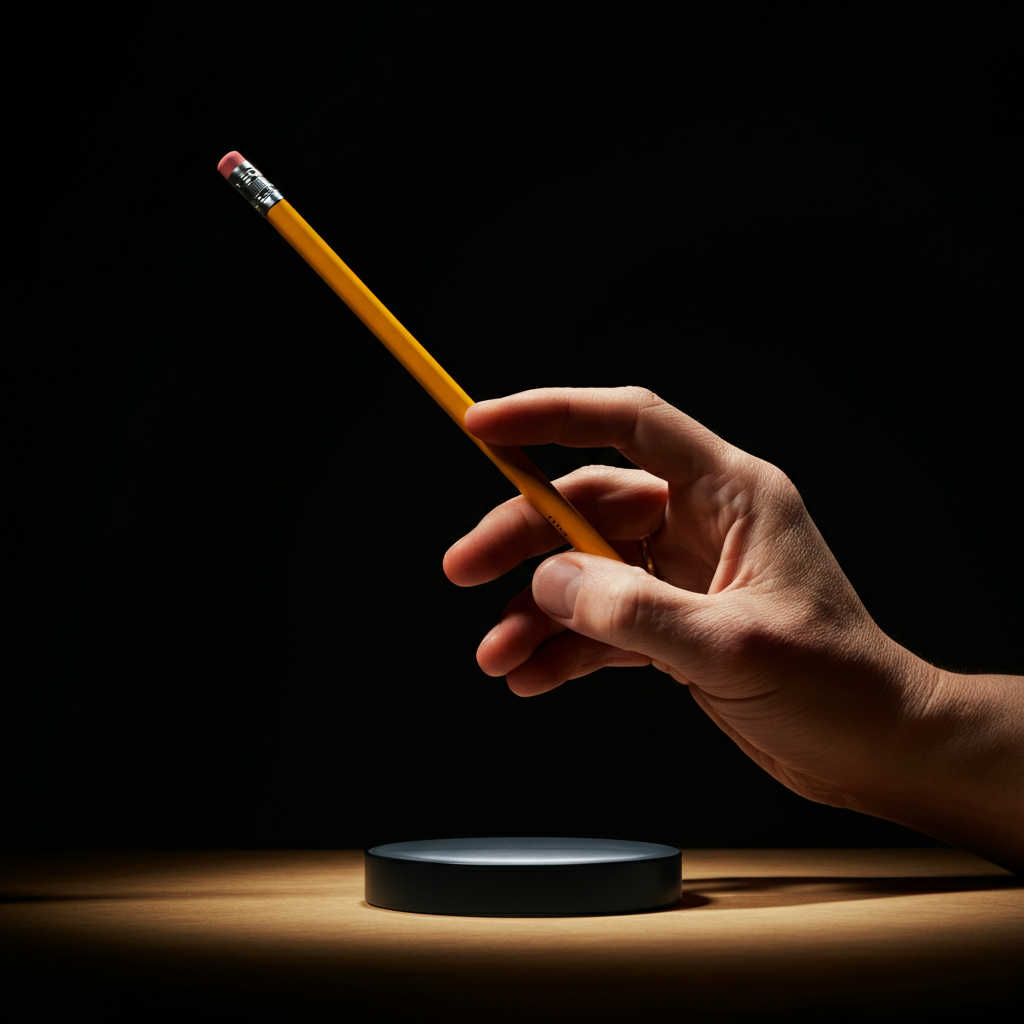
Immediately after your ring finger intercepts the spinning pencil, pinch it firmly between your middle and ring fingers to halt its motion. The goal is to catch and secure the pencil in a controlled manner, preventing it from flying away. A good catch sets you up for another spin or allows you to seamlessly transition into another trick. The pinch should be firm but not so tight that you restrict the pencil's position for subsequent spins. Focus on a decisive, controlled grip.

Step 6: Transition or End - Continuing the Spin
From this caught position, you have several options. You can simply stop the spinning, placing the pencil down or using it for its intended purpose. Alternatively, you can initiate another spin around the middle finger, or even transition to a different finger spin, such as around the ring finger. Mastering the transition requires practice, but opens up a world of more complex tricks. Experiment with different transitions to develop your own unique style.

Common Mistakes to Avoid
- Gripping Too Tight: Restricting the pencil's movement is the biggest obstacle.
- Hesitating on the Ring Finger Thrust: A weak thrust will kill the momentum.
- Interfering with Thumb or Pointer Finger: Keep them out of the way!
- Lack of Timing on the Catch: Anticipate the pencil's return.
- Giving up too easily: Persistence is key, it takes time to get the hang of it.
Pro Tips
- Practice Over a Soft Surface: Reduces the risk of damaging your pencil or your surroundings.
- Start Slow: Focus on the individual movements before speeding up.
- Use a Balanced Pencil: Experiment with different pencils to find one that suits you.
- Watch Tutorials: Visual learning can be invaluable.
Safety Considerations
While pencil spinning is generally safe, it's essential to be mindful of your surroundings. Avoid spinning in crowded areas or near delicate objects. Be aware that a dropped or errant pencil could pose a tripping hazard. If using a pen, ensure the cap is securely on to prevent ink from splattering.
FAQ Section
Q: What type of pencil is best for spinning?
A: A well-balanced pencil with a smooth surface works best. Experiment with different weights and lengths to find your preference.
Q: How long does it take to learn the middle finger spin?
A: It varies depending on your dexterity and practice time. Some people pick it up in a few hours, while others may need a few days or weeks.
Q: Is it easier to learn with a pen or a pencil?
A: Pencils are generally recommended for beginners due to their length and balance. However, personal preference plays a significant role.
Q: What if the pencil keeps hitting my thumb?
A: Focus on extending your thumb further away from the pencil's path. It may also indicate that you're not generating enough initial force with your ring finger.
Conclusion
Mastering the middle finger pencil spin is a journey of practice, patience, and fine motor skill development. By understanding the key principles – the correct grip, the powerful ring finger thrust, the essential finger positioning, and the crucial catch – you can unlock this impressive skill. Remember to be patient with yourself, practice consistently, and have fun with the process. With dedication, you'll be spinning pencils like a pro in no time, adding a touch of flair and focus to your daily routine. So keep practicing, and enjoy the satisfying click-clack of a pencil in motion.