In today's competitive business environment, continuous process improvement is not just an option, it's a necessity. Companies must constantly strive to optimize their operations, reduce costs, and enhance efficiency to stay ahead. But how do you know if your process improvement efforts are actually working? The answer lies in measurement.
Measuring process improvement is a critical step in any successful initiative. It provides valuable insights into the effectiveness of changes, allowing you to make data-driven decisions and ensure that your efforts are aligned with your business goals. Without measurement, you're essentially flying blind, hoping for the best but without any concrete evidence to support your assumptions.
This guide provides a detailed, step-by-step approach to measuring process improvement, covering everything from defining your objectives to analyzing your results. By following these steps, you can ensure that your process improvement initiatives are not only well-intentioned but also demonstrably effective.
Step 1: Define 'Improvement'
Clearly Define What You Want to Achieve
Before you can measure improvement, you need to clearly define what improvement means in the context of your specific process. Are you looking to reduce cycle time, decrease defects, increase customer satisfaction, or lower costs? The more specific you are, the easier it will be to identify and track relevant metrics. This is the foundation upon which your entire measurement strategy will be built.
Consider defining improvement in measurable terms. For example, instead of saying "improve customer satisfaction," define it as "increase the customer satisfaction score by 10%." This provides a concrete target that you can track and measure against. Be sure your process yields an output that *can* be measured.

Step 2: Establish Consistent Vocabulary and Definitions
Standardize Terminology Across Departments
Ambiguity can derail even the most well-intentioned process improvement efforts. Ensure that everyone involved in the project shares a common understanding of key terms and definitions. This is especially important if you have multiple teams or departments working on the same process. Inconsistencies in terminology can lead to misinterpretations, inaccurate data collection, and ultimately, flawed conclusions.
For example, if you're measuring "lead time," define exactly what that encompasses. Does it include order processing time, manufacturing time, shipping time, or all of the above? Document these definitions clearly and make them accessible to everyone involved. It might seem tedious, but it pays dividends in accuracy.

Step 3: Standardize Data Collection Methods
Ensure Data is Collected Consistently
The way you collect data can have a significant impact on the accuracy and reliability of your measurements. Establish standardized data collection methods to ensure that data is collected consistently across all teams and departments. This includes specifying the data sources, the collection frequency, and the tools used to collect the data.
For instance, if you're measuring customer satisfaction, use the same survey instrument for all customers. If you're measuring cycle time, use the same method for recording start and end times. Be clear about measurement units. Failing to do so can introduce bias and make it difficult to compare data across different groups. If one department is using random sampling, they ALL should be using random sampling.

Step 4: Standardize Precision of Calculations
Maintain Consistency in Decimal Places and Rounding
Inconsistencies in calculation precision, such as rounding errors, can accumulate and distort your results. Establish clear guidelines for how data should be rounded and displayed. Decide the number of decimal places and enforce it company-wide. This standardization helps avoid skewed results due to differing levels of detail.
For example, all departments must agree on how to round off decimals when calculating averages or percentages. Using smaller units to begin with will always give more accurate results overall, too. Different departments must also agree on rounding off conventions (rounding up or down, or rounding to the nearest number).

Step 5: Choose a Primary Metric
Identify the Key Performance Indicator (KPI)
A primary metric is the main gauge of success of a project. It should define the main output of the process improvement and be a measurable, attainable, relevant and time-bound goal. Baseline measurements of the project should be taken *before* introducing any changes, and repeated measurements should be taken *after* project completion so the amount of process improvement can be calculated.
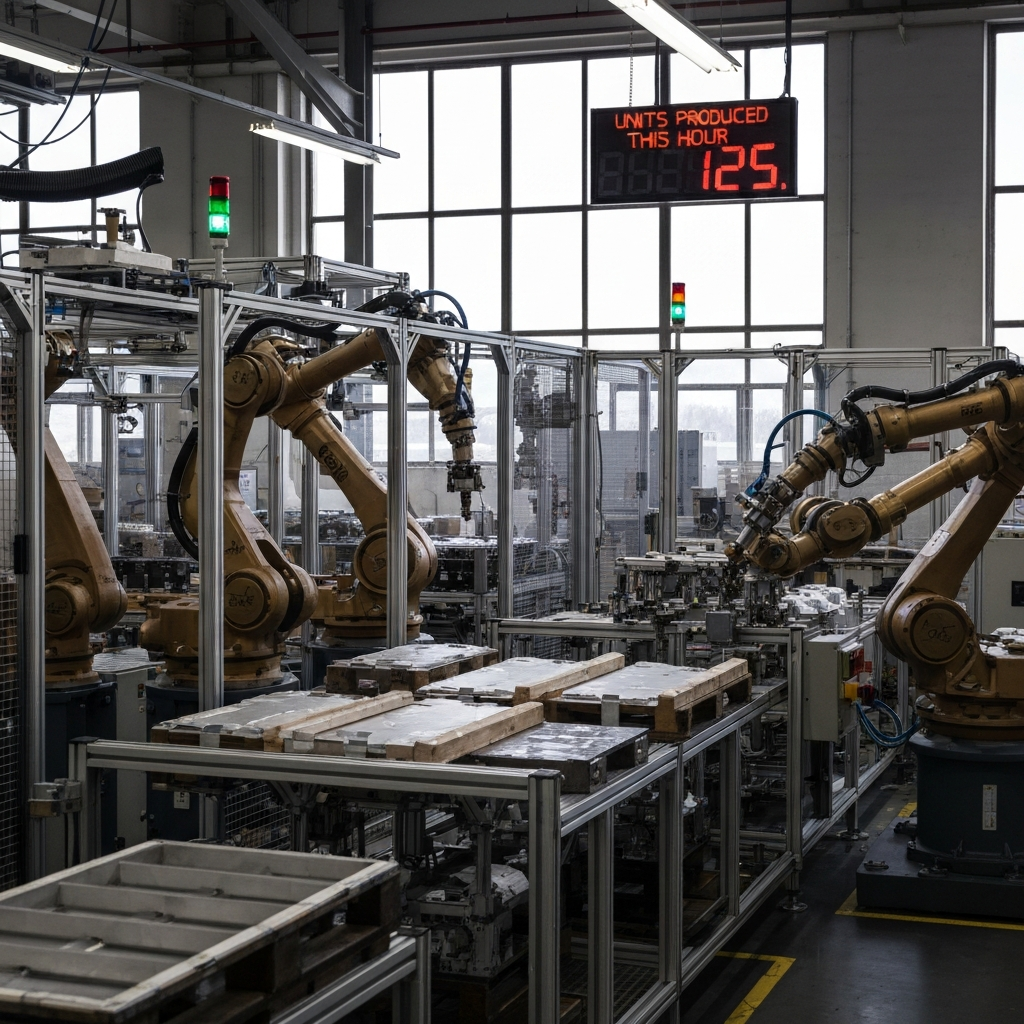
For example, if your goal is to improve manufacturing efficiency, your primary metric might be "units produced per hour." Or, it might be the number of support tickets closed per day. This will differ from company to company and depend on their specific goals.
Step 6: Connect Your Primary Metric to a Business Metric
Show the Impact on Business Goals
It's not enough to simply improve a process; you need to demonstrate how that improvement contributes to the overall business goals. Connect your primary metric to a business metric to illustrate the cause-and-effect relationship. This helps justify the investment in process improvement and demonstrates the value of your efforts.
For example, if your primary metric is "reduced order processing time," your business metric might be "increased customer retention" or "increased revenue." There should be a *direct* cause and effect between the business metric and your primary metric.

Step 7: Consider Unforeseen Outcomes
Identify Consequential Metrics to Avoid Negative Impacts
Process improvements can sometimes have unintended consequences. Identify potential negative impacts and track consequential metrics to ensure that you're not inadvertently creating new problems. These metrics monitor elements that must *not* change due to project implementation.
For example, if you're focused on increasing production speed, you might need to track a consequential metric like "defect rate" to ensure that quality doesn't suffer. Only focus on consequential metrics that impact quality of output.

Step 8: Establish a Financial Metric
Monitor the Financial Impact of the Improvement
While not always the primary focus, the financial impact of process improvement is crucial. Establish a financial metric to track the cost savings, revenue increases, or other financial benefits resulting from your efforts. This will help you determine the return on investment (ROI) of your process improvement initiatives. It's also a good practice to monitor this metric for up to a year *after* project completion.
For example, if you've streamlined a manufacturing process, your financial metric might be "reduced labor costs" or "increased profit margins." This is used as a tool for analyzing the financial benefits, *not* the cost of the project itself.
Step 9: Measure Time
Track Process Duration
Measuring time is essential for understanding how long it takes to complete different steps within a process. Key time-related metrics include process time, value-added time, and response time. Calculating the percentage of on-time deliveries is also beneficial.
By reducing process time, businesses can enhance production rates and expedite service delivery. Consider the scenario of furniture manufacturing: all else being equal, customers would rather receive furniture sooner than later.
Step 10: Measure Costs
Evaluate the Financial Efficiency
Cost metrics are critical for understanding the overall financial efficiency of a process. These metrics include the total production cost, cost per transaction, cost savings, and labor savings. Cost reduction strategies become essential, particularly during periods of revenue decline. Companies monitor cost metrics to pinpoint areas where savings can be maximized without compromising organizational integrity.
Cost reduction strategies become important to businesses when revenue starts to decline. For example, when Bank of America experienced a downturn in lending and trading revenue in 2011, they decided to reduce their workforce in order to continue delivering revenues to shareholders. Bank managers and consultants decided to use cost metrics to identify jobs to eliminate that could save the most money without compromising the organization.
Step 11: Measure Quality
Assess Customer Satisfaction and Error Rates
Quality metrics assess customer satisfaction through surveys, complaints, and feedback. They also evaluate the process's value to the customer and the frequency of errors. Metrics like defect rates and the percentage of complete and accurate outputs are crucial. The key in quality improvement is to increase efficiency without compromising effectiveness. Efficiency refers to the amount of resources necessary to deliver a product or service. Effectiveness refers to how well the objectives of the product or service have been achieved.
Healthcare relies heavily on quality metrics where improvements must be data driven. Financial and clinical data is analyzed to identify variations, find waste, and deliver a high-quality clinical outcome.
Step 12: Measure Output
Determine Production Volume and Efficiency
Output metrics measure the quantity of products or services produced within a specific timeframe. These metrics should align with customer demand. Output metrics also evaluate backlogs, excess inventory (which should be minimal), and works in progress (WIP). One strategy for increasing output in manufacturing is standardized work.
One strategy for increasing output in manufacturing is standardized work. For example, in the automobile industry, auto makers have a standard method for assembling cars. Manufacturers can standardize production processes with the goal of increasing output. Metrics can help to analyze how well a process improves the output for the manufacturer.
Step 13: Measure Process Complexity
Evaluate Steps and Value-Added Activities
Process complexity metrics measure the number of steps in the production process, how often the process slows due to handoffs or approvals, and the total number of value-added steps. The number of times a product is sent back for error correction is also measured.
Companies aim to reduce complexity in their processes, organization, products and information systems in order to stimulate growth, reduce costs and increase returns. Measuring process complexity helps managers to identify where products or services fully meet customer needs at the lowest cost. It helps to reveal hidden costs in overly complicated processes.
Tools or Materials Required
- Spreadsheet software (e.g., Microsoft Excel, Google Sheets)
- Data analysis software (e.g., SPSS, R)
- Process mapping software (e.g., Visio, Lucidchart)
- Statistical Process Control (SPC) software
- Customer survey tools (e.g., SurveyMonkey, Qualtrics)
- Project Management software (e.g. Asana, Jira)
Common Mistakes to Avoid
- Failing to define clear objectives and metrics
- Collecting data inconsistently
- Using inaccurate or unreliable data
- Ignoring potential negative impacts
- Failing to communicate results effectively
- Not involving stakeholders
Conclusion
Measuring process improvement is an essential component of any successful business strategy. By following the steps outlined in this guide, you can ensure that your process improvement efforts are data-driven, aligned with your business goals, and ultimately, contribute to your organization's success. Remember to focus on clear definitions, consistent data collection, and a holistic view of the process, including potential unintended consequences. Continuous measurement and analysis will empower you to optimize your operations and achieve sustainable improvements over time.