Living with family can be a beautiful thing, but sometimes personal space becomes a precious commodity. Are you constantly finding your siblings raiding your candy stash, or your parents "just checking in" at the most inconvenient times? It's a common struggle, and thankfully, there are strategies you can employ to reclaim your room as your sanctuary.
This guide provides practical steps and expert advice on how to set boundaries and communicate your need for privacy within a family setting. It's about finding a balance between maintaining positive relationships and establishing the personal space you deserve. Remember, clear communication and consistent enforcement are key.
We'll explore everything from direct communication techniques to making your room less appealing as a hangout spot. Let's get started on creating a more peaceful living environment for everyone involved.
Step 1: Communicate Your Needs Clearly and Respectfully
Initiate a Calm and Respectful Conversation
The first and most crucial step is to have an open and honest conversation with your family members. Explain how their uninvited entries make you feel without resorting to accusations or anger. Use "I" statements to express your feelings; for example, "I feel uncomfortable when my privacy is invaded without warning." Choose a time when everyone is calm and receptive to avoid defensiveness. Emphasize that this isn't about disliking them, but about your need for personal space to recharge and focus.
Consider using the "sandwich approach" – start with a positive statement, then state your need or request, and end with another positive. For instance, "I love living here and appreciate everything you do, but I also need some uninterrupted time in my room. It would mean a lot to me if you could knock before entering. I think that would make our home even better." Be prepared to reiterate your point calmly if they don't immediately understand or agree.
Step 2: Post a Clear and Polite Sign
Reinforce Your Boundary with a Visual Reminder
A simple, well-placed sign on your door can act as a constant reminder to family members to respect your space. The sign should be polite but firm, such as "Please Knock Before Entering" or "Privacy Please." Make sure the sign is easily visible and at eye level for those you're trying to reach, especially younger siblings. You can even personalize it to make it more effective.
Consider using a dry-erase board instead of a fixed sign. This allows you to write custom messages, addressing specific family members or situations. You could write something like, "Quiet, studying for an exam!" or "Video call in progress, please do not disturb." The flexibility of a dry-erase board makes it a more dynamic and engaging reminder.
Step 3: Assert Yourself When Boundaries are Crossed
Confront Intrusions Directly, But Respectfully
If your family members continue to enter your room unannounced despite your communication and signage, you need to assert yourself. Address the issue immediately and calmly, but firmly. Avoid raising your voice or using accusatory language. State clearly that you've already discussed this issue and that you expect them to respect your privacy.
If someone barges in while you're in your room, stand up and politely, but firmly, escort them back out. Say something like, "We've talked about this, and I need you to respect my space. Please knock next time." Avoid engaging in a prolonged argument; simply reiterate your boundary and guide them out. Consistency is key; if you let it slide once, it sets a precedent for future intrusions.
Step 4: Involve Your Parents (If Applicable)
Seek Parental Support for Enforcing Boundaries
If you're dealing with younger siblings who consistently disregard your requests for privacy, enlisting the support of your parents can be highly effective. Approach your parents privately and explain the situation calmly and rationally. Emphasize that you've already tried communicating directly with your siblings, but your efforts haven't been successful.
Ask your parents to reinforce the importance of respecting personal space with your siblings. Explain that their intervention would help create a more harmonious living environment for everyone. You could even suggest a specific consequence for violating your privacy, such as a temporary loss of privileges. It is essential to frame the issue as a family problem that needs a collaborative solution.

Step 5: Make Your Room Less Appealing
Deter Unwanted Visits by Removing Attractions
Sometimes, family members enter your room because it contains something they want or need. If you have items that are frequently used by the entire family, such as a gaming console or a shared craft supply, consider moving them to a common area. This removes the temptation for them to enter your room under the guise of needing something.
Similarly, if you're constantly being asked to do chores in your room (e.g., folding laundry), establish a clear routine for keeping your space clean and organized. By taking responsibility for your own chores, you eliminate the excuse for others to enter your room to "help" or supervise. Show them that you're responsible and capable of managing your own space.

Step 6: Respect Others' Privacy
Lead by Example to Foster Mutual Respect
Respect is a two-way street. If you expect your family members to respect your privacy, you must reciprocate by respecting theirs. Always knock before entering their rooms, and wait for their permission before entering. Even if they haven't yet started respecting your boundaries, make the first move and demonstrate the behavior you expect.
Avoid snooping through their belongings or eavesdropping on their conversations. By setting a positive example, you're more likely to inspire them to treat you with the same level of respect. Lead by example to encourage mutual respect, which will help ensure that everyone's privacy is honored.

Step 7: Use a Doorstop for short-term blocking
Doorstop for brief security
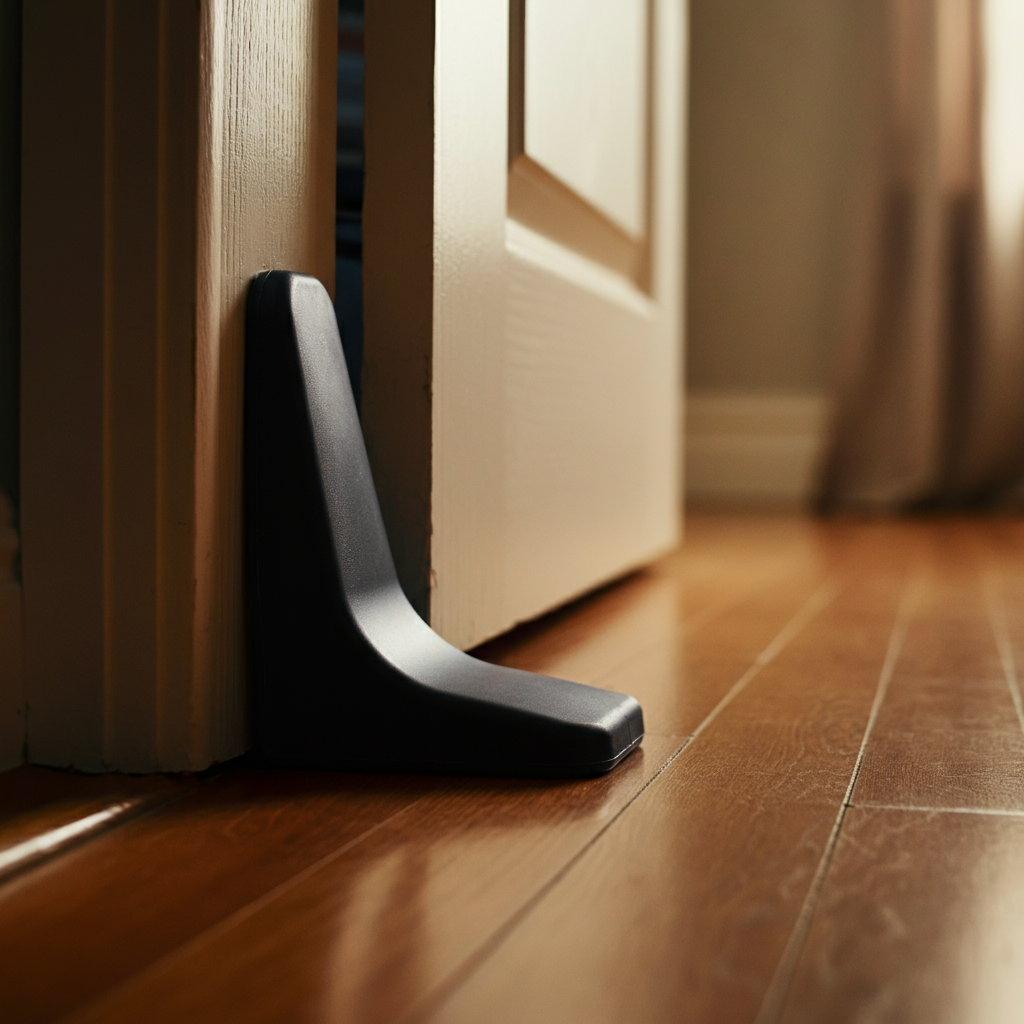
A doorstop can be a surprisingly effective tool for preventing unwanted entry, especially during specific times when you need uninterrupted focus. Simply wedge the doorstop securely under the door, making it difficult for anyone to push the door open from the outside.
Consider using a heavy-duty rubber doorstop for maximum effectiveness. Be sure it is something that cannot be easily removed from the other side of the door. Ensure you have an emergency escape plan in case of fire.
Tools or Materials Required
- Signs (pre-made or DIY)
- Dry-erase board and markers (optional)
- Doorstop (heavy-duty recommended)
Safety Considerations
- Ensure that any barricades you create can be easily removed in case of an emergency.
- Avoid using force or aggression when asserting your boundaries.
- If you feel unsafe or threatened, seek help from a trusted adult.
FAQ Section
- What if my parents refuse to let me lock my door?
- Try explaining your reasons for wanting a lock in a calm and respectful manner. Emphasize that it's about your need for personal space, not about distrust. If they're still resistant, explore alternative solutions, such as a chain lock or a portable door lock that can be removed.
- How do I deal with a sibling who deliberately ignores my boundaries?
- Consistency is key. Every time they violate your privacy, calmly but firmly reiterate your boundary. Involve your parents and implement a consistent consequence for their behavior. Don't give in to their attempts to provoke you; remain calm and assertive.
Conclusion
Reclaiming your personal space within a family setting requires a combination of clear communication, consistent enforcement, and mutual respect. By following these steps and adapting them to your specific situation, you can create a more peaceful and harmonious living environment for yourself and your family. Remember, establishing healthy boundaries is not selfish; it's essential for maintaining healthy relationships and overall well-being. Be patient, persistent, and always strive to communicate your needs with respect and empathy.