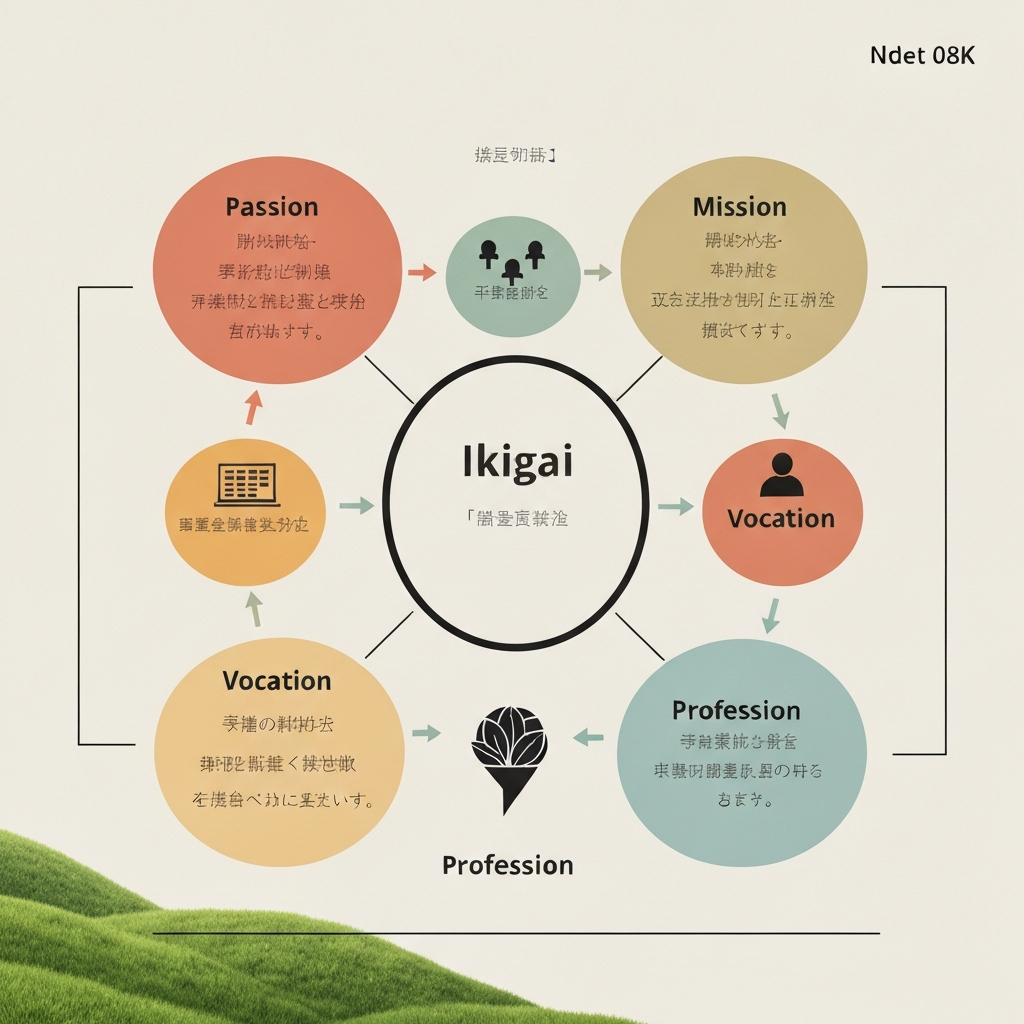
Ikigai, a Japanese concept pronounced "ee-kee-GUY," translates roughly to "a reason for being." It's the intersection of what you love, what you're good at, what the world needs, and what you can be paid for. But it's more than just a career guide; it's a philosophy for living a fulfilling and meaningful life. This guide will walk you through understanding the core principles of Ikigai and provide practical steps to discover your own.
While the Western interpretation often focuses on a Venn diagram of intersecting elements, the true essence of Ikigai is about finding joy and purpose in everyday life. It's about identifying activities and values that make you feel alive and contributing to something larger than yourself. Whether it's a grand passion or a simple hobby, your Ikigai is personal and unique.
Embarking on the journey to discover your Ikigai can feel daunting, but with patience and introspection, you can unlock a deeper sense of meaning and direction. This guide is designed to provide you with the tools and understanding necessary to begin this transformative process.
Step 1: Understanding the Core Principles of Ikigai
Before diving into practical exercises, it's essential to grasp the foundational concepts of Ikigai. It is about more than just finding a job that pays well. It's about finding a harmonious balance between your passions, skills, contributions to society, and financial needs. It’s a deeply personal and evolving journey, not a destination. The traditional western understanding has boiled it down into a 4-part Venn diagram – but that’s a simplification of a broader philosophy. The core idea is that a life with Ikigai is a life of purpose, direction, and ultimately satisfaction.
Step 2: Identifying Your Passions: What Do You Love?
Your passions are the activities and subjects that ignite your curiosity and bring you joy. These are the things you would do even if you weren't paid for them. They're the activities that make you lose track of time and leave you feeling energized. Take some time to reflect on what truly excites you. Consider hobbies, subjects you enjoy learning about, or activities that consistently bring you a sense of fulfillment. Don’t limit yourself! Allow yourself to dream and consider the seemingly impossible. What did you love doing as a child? Often, the answers lie in revisiting those early passions.
Practical Tip: Keep a journal for a week, noting down every activity that makes you feel genuinely happy or engaged. Review the journal at the end of the week and look for common themes.
Step 3: Recognizing Your Strengths: What Are You Good At?
Your strengths are your natural talents and the skills you've developed over time. These are the things that come easily to you, and that you excel at. Recognizing your strengths is crucial because it allows you to leverage them in your pursuit of Ikigai. Think about what others often compliment you on. What are you asked to help with? What tasks do you complete efficiently and effectively? Often, our strengths are so natural to us that we underestimate their value. Don’t just consider tangible skills; include your soft skills like empathy, communication, or problem-solving.
Common Mistake to Avoid: Don't confuse strengths with things you simply *think* you should be good at. Focus on skills that genuinely bring you satisfaction and positive feedback.
Step 4: Defining Your Contribution: What Does the World Need?
Identifying what the world needs is about understanding how you can make a positive impact on society, even in a small way. This doesn't necessarily mean solving global crises; it can be as simple as offering support to your community, helping a friend in need, or advocating for a cause you believe in. Consider the issues that you are passionate about and what skills you have that could be applied to addressing those issues. Consider environmental concerns, social injustices, or even the simple need for human connection. Your Ikigai should incorporate a sense of purpose that extends beyond your own personal gain.

Step 5: Exploring Income Opportunities: What Can You Be Paid For?
While Ikigai isn't solely about financial gain, it's important to consider how you can sustain yourself while pursuing your passions. This doesn't necessarily mean earning a fortune; it simply means finding a way to support your basic needs and allow you to continue pursuing your Ikigai. Research potential income streams related to your passions and skills. Consider freelance work, consulting, selling products or services, or even starting a small business. Be creative and explore unconventional options. The gig economy offers numerous opportunities to monetize skills that were previously considered hobbies.
Pro Tip: Don’t be afraid to start small. You don’t need to immediately quit your day job. Start by dedicating a few hours a week to exploring your Ikigai and gradually scale up as you find success.
Step 6: Finding the Intersection: Where Do These Elements Align?
This is the most challenging, yet most rewarding step. Once you've identified your passions, strengths, contributions, and income opportunities, it's time to find the intersection where these elements align. This intersection is your Ikigai. It's the sweet spot where you're doing what you love, utilizing your talents, making a positive impact, and earning a living. This process requires careful consideration and experimentation. It may involve trying different combinations and making adjustments along the way. Don't be discouraged if you don't find your Ikigai immediately. It's a journey of self-discovery that takes time and effort.
Step 7: Experiment and Iterate
Finding your Ikigai is not a one-time event but rather an ongoing process of experimentation and iteration. Once you have an idea of what your Ikigai might be, start taking small steps to explore it. Try different activities, take on new challenges, and seek feedback from others. Be willing to adapt and adjust your path as you learn more about yourself and the world around you. The key is to remain open to new possibilities and embrace the journey of self-discovery. It is likely that your Ikigai will evolve over time, so be prepared to revisit and refine your understanding of it.
Step 8: Embrace Imperfection
It's essential to remember that the pursuit of Ikigai is not about achieving perfection, but rather about finding fulfillment and meaning in your life. Don't get bogged down in the details or become discouraged by setbacks. Embrace the imperfections along the way and focus on the overall direction of your journey. Remember that progress, not perfection, is the goal. Even small steps towards your Ikigai can have a significant impact on your overall well-being and sense of purpose.
FAQ Section
Q: Is it possible to have multiple Ikigai?
A: Yes, it is entirely possible to have multiple Ikigai. As you grow and evolve, your passions, skills, and priorities may change, leading you to discover new sources of meaning and purpose.
Q: What if I can't find a way to make money from my passions?
A: While earning a living from your passions is ideal, it's not always feasible. In such cases, you can still incorporate your passions into your life through hobbies, volunteer work, or side projects. The key is to find a balance between your financial needs and your desire for fulfillment.
Q: How long does it take to find your Ikigai?
A: There is no set timeframe for finding your Ikigai. It's a deeply personal journey that can take months, years, or even a lifetime. The important thing is to remain patient, persistent, and open to new experiences.
Conclusion
Discovering your Ikigai is a journey of self-discovery, reflection, and purposeful action. By understanding the core principles of Ikigai, identifying your passions and strengths, contributing to the world, and exploring income opportunities, you can unlock a deeper sense of meaning and fulfillment in your life. Remember that the process is ongoing, and it requires patience, experimentation, and a willingness to embrace imperfection. By embarking on this journey, you can transform your life and find your reason for being.