The balance sheet, also known as the statement of financial position, is a snapshot of a company's assets, liabilities, and equity at a specific point in time. Understanding how to read and interpret a balance sheet is crucial for investors, creditors, and business owners alike. It provides valuable insights into a company's financial health, liquidity, solvency, and overall stability. Mastering the art of balance sheet analysis allows you to make informed decisions about investing, lending, or managing your own business finances.
This guide will walk you through the essential steps involved in using a balance sheet effectively. We'll break down the components, demonstrate how to analyze key ratios, and highlight common pitfalls to avoid. By the end of this guide, you'll be equipped with the knowledge and skills to confidently interpret balance sheets and extract meaningful information about a company's financial standing. Remember that understanding the context of the industry and the company's specific circumstances is always important when analyzing financial statements.
Whether you're a seasoned financial professional or just starting to learn about accounting, this guide provides a comprehensive and practical approach to using a balance sheet for informed decision-making. Let's dive in!
Step 1: Understanding the Basic Equation
The Accounting Equation
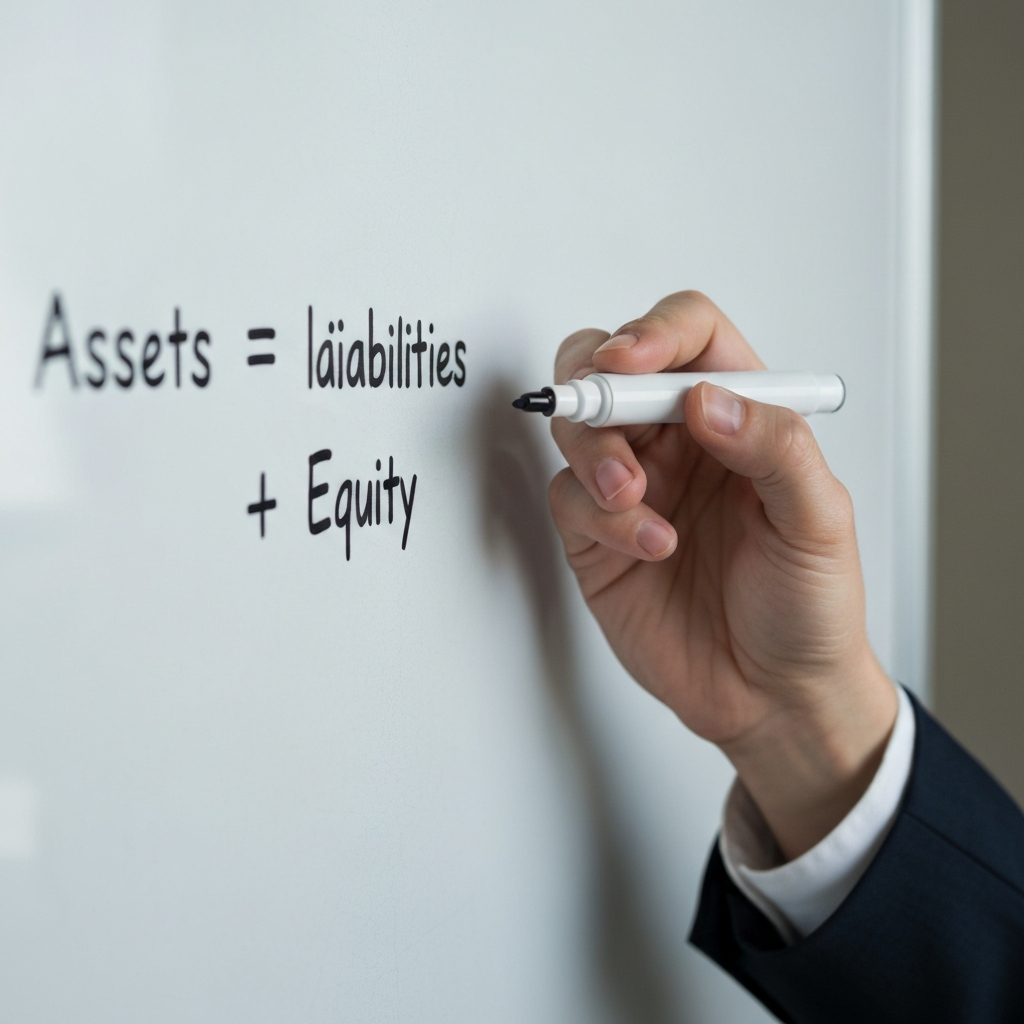
The balance sheet is based on the fundamental accounting equation: Assets = Liabilities + Equity. This equation signifies that a company's assets are financed by either liabilities (what the company owes to others) or equity (the owner's stake in the company). Understanding this equation is paramount, as it forms the foundation of the entire balance sheet. Assets represent what the company owns, such as cash, accounts receivable, inventory, and property, plant, and equipment (PP&E). Liabilities represent what the company owes to others, including accounts payable, salaries payable, and long-term debt. Equity represents the owner's or shareholders' residual claim on the assets after deducting liabilities, typically including common stock, retained earnings, and additional paid-in capital.
Step 2: Identifying the Components of the Balance Sheet
Assets, Liabilities, and Equity
The balance sheet is divided into three main sections: assets, liabilities, and equity. Each section is further subdivided into current and non-current (or long-term) categories. Current assets are those that are expected to be converted to cash or used up within one year, such as cash, accounts receivable, and inventory. Non-current assets are those that are not expected to be converted to cash or used up within one year, such as property, plant, and equipment (PP&E), intangible assets, and long-term investments. Current liabilities are obligations that are expected to be settled within one year, such as accounts payable, salaries payable, and short-term debt. Non-current liabilities are obligations that are not expected to be settled within one year, such as long-term debt, deferred tax liabilities, and pension obligations. Equity represents the owner's or shareholders' stake in the company. It can be made up of different components depending on the company's legal structure. Carefully examine the footnotes to the balance sheet as they provide critical detail and explanation of individual line items.

Step 3: Analyzing Liquidity Ratios
Current Ratio and Quick Ratio
Liquidity ratios measure a company's ability to meet its short-term obligations. Two common liquidity ratios are the current ratio and the quick ratio. The current ratio is calculated by dividing current assets by current liabilities. A current ratio of 2 or higher is generally considered healthy, indicating that the company has twice as many current assets as current liabilities. However, the ideal current ratio can vary depending on the industry. The quick ratio (also known as the acid-test ratio) is calculated by dividing quick assets (cash, marketable securities, and accounts receivable) by current liabilities. The quick ratio is a more conservative measure of liquidity than the current ratio because it excludes inventory, which may not be easily converted to cash. A quick ratio of 1 or higher is generally considered healthy.

Step 4: Assessing Solvency Ratios
Debt-to-Equity Ratio and Debt-to-Assets Ratio
Solvency ratios measure a company's ability to meet its long-term obligations. These ratios provide insights into the company's financial leverage and risk. The debt-to-equity ratio is calculated by dividing total debt by total equity. A higher debt-to-equity ratio indicates that the company is more reliant on debt financing, which can increase its financial risk. The debt-to-assets ratio is calculated by dividing total debt by total assets. This ratio indicates the proportion of a company's assets that are financed by debt. Analyzing solvency ratios in conjunction with industry benchmarks is crucial to determine whether a company's leverage is appropriate.
Step 5: Evaluating Efficiency Ratios
Asset Turnover Ratio
Efficiency ratios measure how effectively a company is using its assets to generate revenue. The asset turnover ratio is a key efficiency ratio that indicates how efficiently a company is using its assets to generate sales. It's calculated by dividing net sales by total assets. A higher asset turnover ratio generally indicates that the company is effectively utilizing its assets to generate revenue. However, the ideal asset turnover ratio can vary significantly depending on the industry. It's crucial to compare a company's asset turnover ratio to its competitors and industry averages to assess its efficiency. A low turnover ratio may suggest the company is not utilizing its assets effectively or may have obsolete or underutilized assets.

Step 6: Comparing Balance Sheets Over Time
Trend Analysis
Analyzing a balance sheet at a single point in time provides valuable information, but comparing balance sheets over multiple periods (e.g., quarterly or annually) provides even greater insights into a company's financial trends. This is called trend analysis. By comparing key line items and ratios over time, you can identify patterns and trends that might not be apparent from a single balance sheet. For example, you can track changes in current assets, current liabilities, debt levels, and equity to assess the company's financial performance and stability over time. Look for significant changes in key ratios and investigate the underlying reasons for those changes.

Step 7: Industry Benchmarking
Comparing to Competitors
Understanding a company's financial position requires comparing its balance sheet to those of its competitors and industry averages. This is known as industry benchmarking. By comparing key ratios and line items, you can assess how well the company is performing relative to its peers. Identify companies of similar size and business models to ensure a meaningful comparison. If a company's performance significantly deviates from the industry average, it may indicate a potential strength or weakness that warrants further investigation.

Tools or Materials Required
- Balance sheets of the company being analyzed
- Financial calculator or spreadsheet software (e.g., Excel, Google Sheets)
- Industry benchmark data (available from financial databases, industry reports, and regulatory filings)
- Understanding of basic accounting principles
Common Mistakes to Avoid
- Relying solely on ratios without understanding the underlying data
- Ignoring the footnotes to the balance sheet
- Failing to compare balance sheets over time
- Not considering the industry context
- Using outdated or inaccurate data
FAQ Section
- What is the difference between a balance sheet and an income statement?
- The balance sheet is a snapshot of a company's assets, liabilities, and equity at a specific point in time, while the income statement (also known as the profit and loss statement) reports a company's financial performance over a period of time.
- How often should a balance sheet be reviewed?
- Ideally, a balance sheet should be reviewed at least quarterly to track changes in a company's financial position.
- What are some limitations of using a balance sheet?
- The balance sheet is based on historical cost, which may not reflect current market values. It also excludes certain off-balance sheet items, such as contingent liabilities and operating leases (though lease accounting rules have changed, requiring capitalization of some leases). Furthermore, the balance sheet is only a snapshot in time, and a company's financial position can change rapidly.
Conclusion
Mastering the art of using a balance sheet is an essential skill for anyone involved in business or finance. By understanding the basic accounting equation, analyzing key ratios, comparing balance sheets over time, and considering the industry context, you can gain valuable insights into a company's financial health and make informed decisions. Remember to always exercise caution and seek professional advice when needed. Continuous learning and staying updated with the latest accounting standards are crucial for effective balance sheet analysis. With practice and dedication, you can confidently use the balance sheet as a powerful tool for financial decision-making.