Alchemical symbols, a cryptic yet fascinating language, were integral to the practice of alchemy, a precursor to modern chemistry. These symbols served not only as a shorthand for elements, compounds, and processes but also as a veil, shrouding alchemists' work in secrecy from both the uninitiated and, at times, potentially hostile authorities. Delving into the world of alchemical symbols is akin to unlocking a secret code, offering a glimpse into the minds of those who sought to transmute base metals into gold, discover the elixir of life, and ultimately, understand the fundamental nature of reality.
Understanding these symbols provides insight into the history of science, philosophy, and spirituality. Alchemy wasn't merely about chemical transformations; it was a holistic endeavor that intertwined the physical and spiritual realms. Each symbol carries layers of meaning, reflecting not just the substance it represents but also its associated qualities, planetary influences, and role in the alchemical process. This guide will walk you through the most important alchemical symbols, their meanings, and their significance in the broader context of alchemical thought.
Whether you are a student of history, a practicing occultist, or simply curious about the esoteric traditions of the past, this guide will provide you with a solid foundation for understanding the symbolic language of alchemy. Prepare to embark on a journey through the intricate world of alchemical symbols, unlocking the secrets they hold and gaining a deeper appreciation for the rich history of this fascinating discipline.
Step 1: Understanding the Three Primes
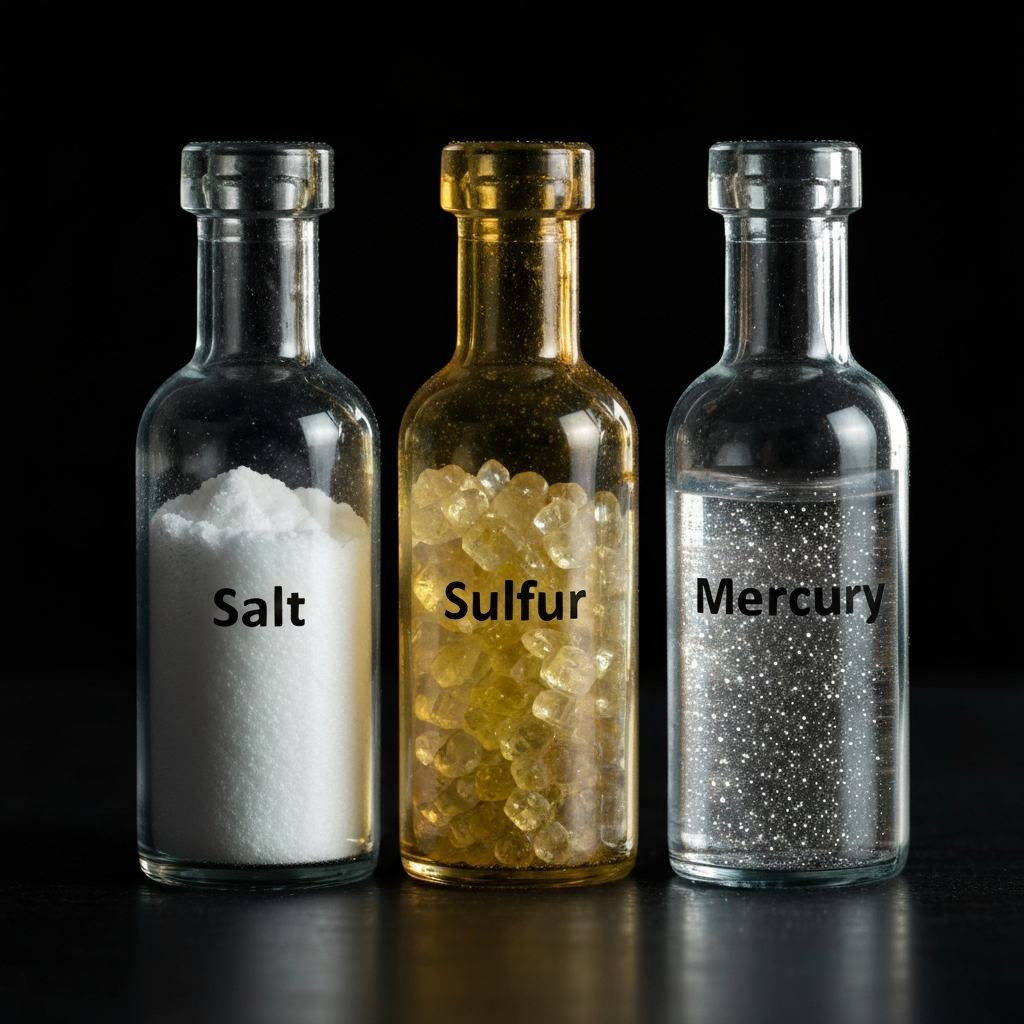
The Three Primes – Salt, Sulfur, and Mercury – are considered foundational in alchemical philosophy. These aren't simply the elements we know today; rather, they represent fundamental aspects of existence. Think of them as philosophical building blocks that constitute all matter and are intricately linked to the human spirit. Understanding these primes is crucial for interpreting more complex alchemical concepts.
- Salt (🜔): Symbolizes the body and its inherent stability. It represents the principle of fixity and non-combustibility. Alchemists believed it was the essential essence of a substance, a crucial nutrient for life.
- Sulfur (🜍): Represents the soul and the principle of combustibility. It acts as a bridge between the body (Salt) and the spirit (Mercury), signifying the active, masculine force.
- Mercury (☿): Symbolizes the spirit, volatility, and life force. It embodies the principle of fusibility, signifying a state that transcends death or the earthly realm. Mercury represents the passive, feminine force.
It's important to remember that these are not literal definitions. They represent underlying principles and interactions. Confusing the symbolic Salt with table salt, for example, would be a common mistake.
Step 2: Exploring the Four Elements
Drawing heavily from ancient Greek philosophy, alchemy incorporates the Four Elements – Air, Earth, Fire, and Water – as fundamental constituents of matter. Each element possesses specific qualities and plays a vital role in alchemical processes. These elements are not just physical substances; they represent states of being, qualities, and forces in the universe. Their symbols, depicted as triangles, are cornerstones of alchemical notation.
- Air (🜁): Signifies heat and wetness, representing the life force and blood. It's the opposite of Earth.
- Earth (🜃): Represents cold and dryness, embodying physical movements and the humor (body fluid) of black bile. It is the opposite of Air.
- Fire (🜂): Signifies heat and dryness, associated with passion, love, anger, and the humor of yellow bile. It is the opposite of Water.
- Water (🜄): Represents cold and wetness, intuition, femininity, and the body humor of phlegm. It is the opposite of Fire.
A crucial consideration is recognizing the relationships between the elements. Understanding how they interact and balance is key to comprehending alchemical transformations. For instance, Fire and Water are opposing forces, while Air and Earth represent different aspects of the material world.

Step 3: Discovering the Planetary Metals
Alchemy inextricably linked the cosmos with earthly substances, associating each of the then-known planets with a specific metal. This connection reflects the alchemists' belief that celestial forces influenced the composition and properties of matter. The planetary symbols are some of the most recognizable and widely used in alchemical texts.
- Gold (☉ or ☼): Associated with the Sun, representing perfection, enlightenment, and the incorruptible.
- Silver (☽ or ☾): Linked to the Moon, symbolizing purity, reflection, and the feminine principle.
- Mercury (☿): Connected to the planet Mercury, representing intellect, communication, and transformation.
- Copper (♀): Associated with Venus, symbolizing love, beauty, and harmony.
- Iron (♂): Linked to Mars, representing strength, courage, and the masculine principle.
- Tin (♃): Associated with Jupiter, symbolizing prosperity, justice, and leadership.
- Lead (♄): Linked to Saturn, representing restriction, limitation, and the passage of time.
A common pitfall is to view these associations as merely symbolic. Alchemists believed in a literal connection, with planetary energies influencing the metals' properties. Understanding this mindset is key to grasping the depth of alchemical thought.

Step 4: Unveiling Alchemical Compounds
Beyond the basic elements and metals, alchemists also utilized symbols to represent various compounds crucial to their experiments. These compounds often served as intermediates in the quest for transmutation or the creation of the elixir of life. While less philosophically loaded than the primes or elements, understanding these symbols is vital for deciphering alchemical recipes and procedures.
- Acid (🜊)
- "Sal Ammoniac" (🜹): Ammonium Chloride
- "Aqua Fortis" (🜅): Nitric Acid
- "Aqua Regia" (🜆): Nitro-Hydrochloric Acid
- "Spirit of Wine" (🜈 or 🜉): Concentrated Ethanol
- "Amalgam" (🝛): Alloys of a metal with mercury
- "Cinnabar" (🜓): Mercury Sulfide
- Distilled Vinegar (🜋)
- "Vitriol" (🜖): Sulfates
- "Black Sulfur" (🜏): Residue from the sublimation of sulfur
It's important to note that alchemical notation wasn't always standardized. Different alchemists might have used slightly different symbols or variations. Context is key when interpreting these symbols. A good understanding of basic chemical processes and laboratory equipment will help in the identification process.

Step 5: Decoding Alchemical Processes and Time
Alchemy wasn't just about substances; it was also about processes – the steps and transformations necessary to achieve the desired outcome. Alchemists often encoded these processes using symbolic language, including astrological symbols and representations of time. These symbols offer insights into the alchemists' understanding of the interconnectedness between the cosmos, time, and the material world.
- Astrological Symbols: Were used to represent the 12 experimental processes of the Magnum Opus ("Great Work").
- ♈︎ (Aries): Calcination
- ♉︎ (Taurus): Congelation
- ♊︎ (Gemini): Fixation (Solidification)
- ♋︎ (Cancer): Solution
- ♌︎ (Leo): Digestion
- ♍︎ (Virgo): Distillation
- ♎︎ (Libra): Sublimation
- ♏︎ (Scorpio): Separation
- ♐︎ (Sagittarius): Ceration
- ♑︎ (Capricorn): Fermentation (Putrefaction)
- ♒︎ (Aquarius): Multiplication
- ♓︎ (Pisces): Projection
Furthermore, alchemists used specific symbols for measurements of time. Understanding these symbols allows for a deeper understanding of their experiments. This includes encoding their work using symbols representing duration and seasons.
Understanding the context and historical period in which these symbols were used is important. A symbol's meaning could subtly change across different eras and alchemical schools. Don't assume a single interpretation fits all cases.
Step 6: The Philosopher's Stone
The ultimate goal of alchemy was the creation of the Philosopher's Stone, a legendary substance believed to be capable of transmuting base metals into gold and granting immortality. Its symbol, often referred to as the "squared circle," encapsulates the alchemical quest for perfection and the unification of opposing forces. Understanding the symbolism of the Philosopher's Stone provides insight into the deeper philosophical and spiritual aspirations of alchemy.
- The "Squared Circle": Represents the integration of the four classical elements in perfect harmony. The encompassing triangle represents the three primes.
It's crucial to recognize that the Philosopher's Stone was not merely a physical substance. It also represented spiritual enlightenment and the perfection of the soul. Approaching its symbolism with this broader perspective is essential.

Safety Considerations
While studying alchemical symbols, remember that the actual practice of alchemy often involved hazardous materials and processes. Do not attempt to recreate any alchemical experiments described in historical texts without proper training and safety precautions. Many alchemical substances are toxic or corrosive and can pose serious health risks.
Conclusion
Alchemical symbols offer a fascinating window into a world where science, philosophy, and spirituality intertwined. By understanding the Three Primes, the Four Elements, the Planetary Metals, and other key symbols, you can unlock the secrets of this ancient discipline and gain a deeper appreciation for the rich history of alchemy. Remember to approach these symbols with a critical and nuanced perspective, recognizing their multifaceted meanings and the historical context in which they were used. The world of alchemical symbolism continues to fascinate, offering both insight and a unique form of expression into the human desire for knowledge and understanding.